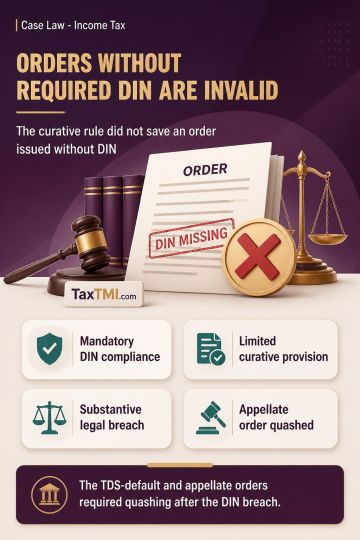
Document Identification Number compliance renders TDS-default orders invalid where mandatory DIN requirements are breached and curative provision does...
The dominant issue was whether an appeal filed beyond the statutory period prescribed under Section 85(3A) of the Finance Act, 1994 could be entertained when the delay exceeded the maximum condonable limit (60 days plus a further 30 days). The tribunal held that the right of appeal is purely statutory and cannot be enlarged on equitable considerations; filing in an incorrect forum or attributing delay to one's own mistake does not confer a right to bypass a clear limitation bar, nor attract exclusion of time under general limitation principles. Consequently, the time-barred appeal was not entertainable and was dismissed. - CESTAT
The dominant issue was whether an appeal filed beyond the statutory period prescribed under Section 85(3A) of the Finance Act, 1994 could be entertained when the delay exceeded the maximum condonable limit (60 days plus a further 30 days). The tribunal held that the right of appeal is purely statutory and cannot be enlarged on equitable considerations; filing in an incorrect forum or attributing delay to one's own mistake does not confer a right to bypass a clear limitation bar, nor attract exclusion of time under general limitation principles. Consequently, the time-barred appeal was not entertainable and was dismissed. - CESTAT
Note: It is a system-generated summary and is for quick reference only.
 TaxTMI
  TaxTMI
 of 4918