Customs jurisdiction over EPCG condition breaches survives export-obligation discharge certificates, requiring alleged fraud and misdeclaration to be ...
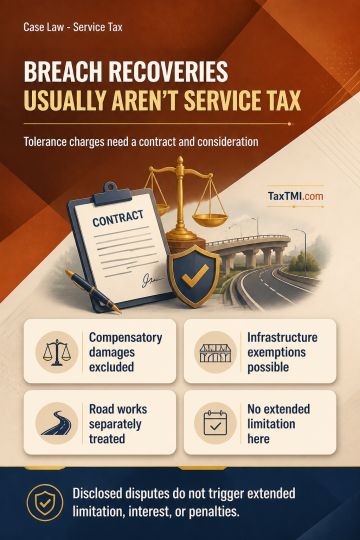
Contractual tolerance requires consideration; breach recoveries, qualifying public infrastructure services and road works escape service tax liability...
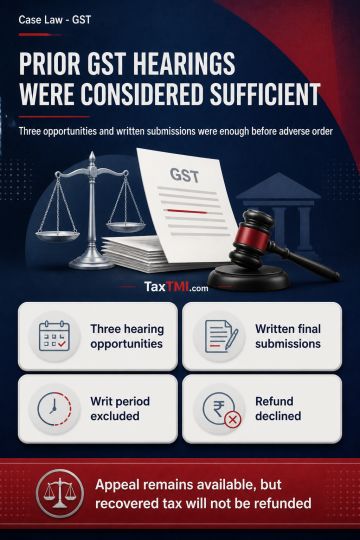
Personal hearing requirements in GST adjudication were satisfied by prior opportunities and written submissions; appellate limitation received writ-pe...
Input tax credit was denied on the ground that returns for May 2018-March 2019 were not filed within the time limit under Section 16(4) of the CGST Act. The Court held that the subsequently introduced Section 16(5) creates an overriding entitlement, since it begins with a non obstante clause and imposes only the condition that the relevant returns be filed on or before 30 November 2021; upon such filing, the limitation under Section 16(4) becomes inapplicable. The earlier adverse order in prior proceedings challenging Section 16(4) did not bar relief, as Section 16(5) furnished a fresh statutory basis. Relief was granted and the petition was disposed of. - HC
Input tax credit was denied on the ground that returns for May 2018-March 2019 were not filed within the time limit under Section 16(4) of the CGST Act. The Court held that the subsequently introduced Section 16(5) creates an overriding entitlement, since it begins with a non obstante clause and imposes only the condition that the relevant returns be filed on or before 30 November 2021; upon such filing, the limitation under Section 16(4) becomes inapplicable. The earlier adverse order in prior proceedings challenging Section 16(4) did not bar relief, as Section 16(5) furnished a fresh statutory basis. Relief was granted and the petition was disposed of. - HC
Note: It is a system-generated summary and is for quick reference only.
 TaxTMI
 of 4788













 Join Channel


 TaxTMI