Charitable trust registration requires a specified-violation notice; settled cash deposits and related-party payments did not justify cancellation or ...
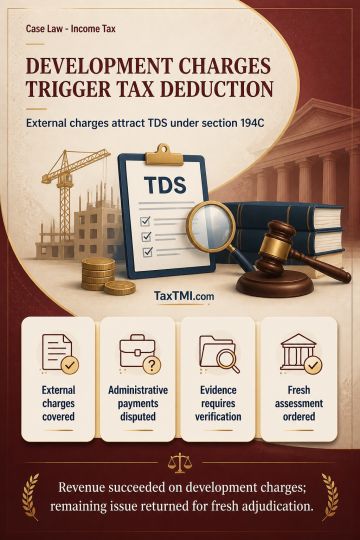
External development charges trigger TDS under section 194C, while disputed administrative payments require factual verification and fresh adjudicatio...
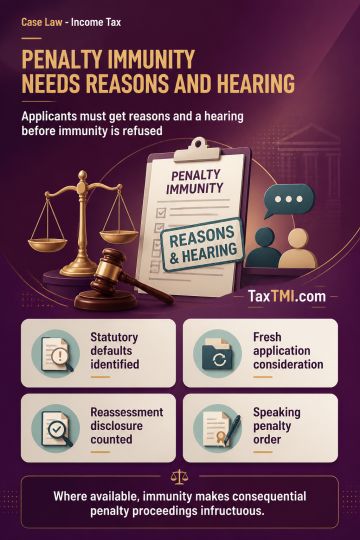
Section 270AA penalty immunity requires identified statutory defaults and a hearing before rejection; reassessment disclosure may constitute under-rep...
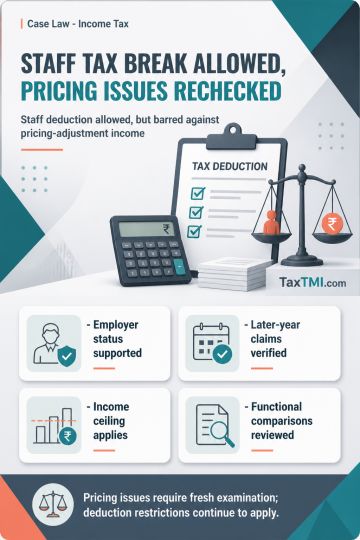
Section 80JJAA employee-cost deduction allowed for deployed staff but barred against transfer-pricing income enhancement, with pricing issues remanded...
Transfer-pricing methodology protects commercially genuine associated-enterprise payments, while pre-2016 secondary adjustments and related notional i...
Negative liens over operating assets can constitute international transactions requiring arm's-length pricing reflecting restricted borrowing and expa...
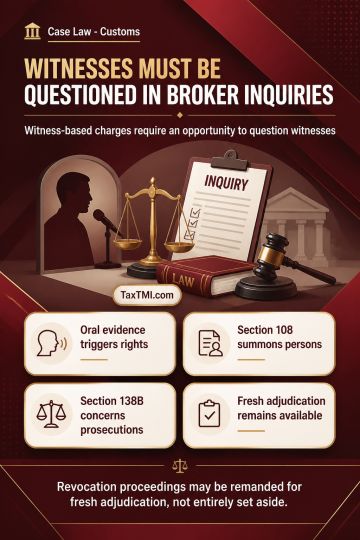
Cross-examination rights in Customs Broker revocation inquiries require witness examination; procedural denial may be cured through fresh adjudication...
The dominant issue was whether the show-cause notices alleging insider trading were without jurisdiction and violative of natural justice. Interpreting the statutory scheme for appointment/delegation of adjudicatory functions, and applying the legislative intent recognised in Vijay Karia, the court held that only an officer of the rank of CGM or above could validly initiate such action; a DGM lacked competence, making the notices ultra vires and amenable to writ interference despite the usual restraint against entertaining challenges to show-cause notices. The notices were also found vitiated by pre-determination of guilt and non-supply of relied-upon investigation material, breaching fairness and natural justice; consequently, the notices were quashed. - HC
The dominant issue was whether the show-cause notices alleging insider trading were without jurisdiction and violative of natural justice. Interpreting the statutory scheme for appointment/delegation of adjudicatory functions, and applying the legislative intent recognised in Vijay Karia, the court held that only an officer of the rank of CGM or above could validly initiate such action; a DGM lacked competence, making the notices ultra vires and amenable to writ interference despite the usual restraint against entertaining challenges to show-cause notices. The notices were also found vitiated by pre-determination of guilt and non-supply of relied-upon investigation material, breaching fairness and natural justice; consequently, the notices were quashed. - HC
Note: It is a system-generated summary and is for quick reference only.
 TaxTMI
  TaxTMI
 of 4828


















 Join Channel


