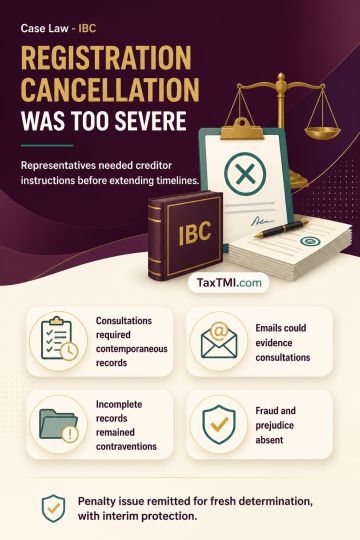
Disciplinary proportionality requires penalties for Authorised Representative misconduct to match proven harm, leading to reconsideration of registrat...
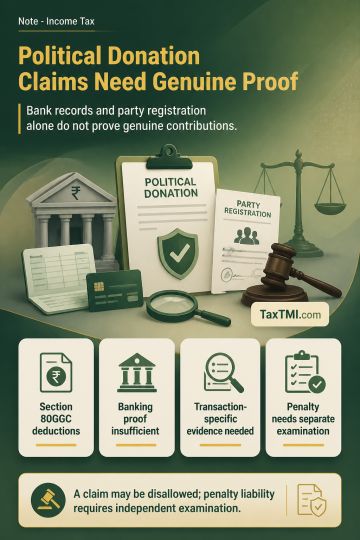
Political contribution deductions require genuine transactions; banking records and party registration alone cannot defeat evidence of accommodation e...
Post-death GST liability permits fresh proceedings against legal representatives, while discontinued-business recovery remains limited to the inherite...
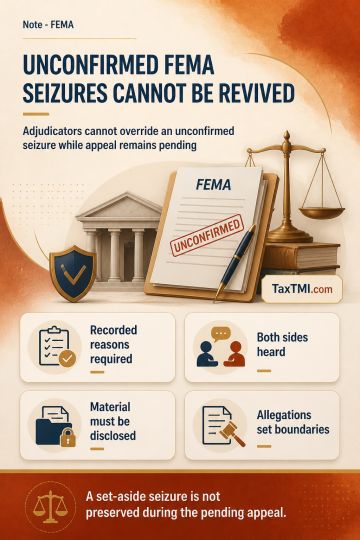
Non-confirmation of FEMA seizure prevents adjudicators from overriding pending appellate findings on recorded reasons and suspected foreign asset hold...
Demand of differential customs duty was examined on the dominant issue whether it can be fastened "jointly and severally" on more than one person for mis-declared imports, consistent with Article 265 requiring levy and collection only by authority of law. Relying on the principle that a taxing statute must clearly specify the taxable event, liable person, rate and measure, the tribunal held that joint and several recovery must be traceable to a specific statutory provision; while primary liability lies on the importer under s.28, s.147 permits recovery from an authorised agent in defined circumstances. The matter was remanded for de novo adjudication on applicability of such authority. - CESTAT
Demand of differential customs duty was examined on the dominant issue whether it can be fastened "jointly and severally" on more than one person for mis-declared imports, consistent with Article 265 requiring levy and collection only by authority of law. Relying on the principle that a taxing statute must clearly specify the taxable event, liable person, rate and measure, the tribunal held that joint and several recovery must be traceable to a specific statutory provision; while primary liability lies on the importer under s.28, s.147 permits recovery from an authorised agent in defined circumstances. The matter was remanded for de novo adjudication on applicability of such authority. - CESTAT
Note: It is a system-generated summary and is for quick reference only.
 TaxTMI
  TaxTMI
 of 4921