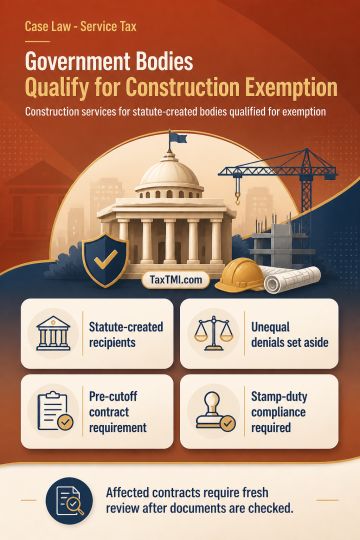
Governmental authority status supports construction-service exemption, while pre-cutoff contract and stamp-duty compliance requires verification on re...
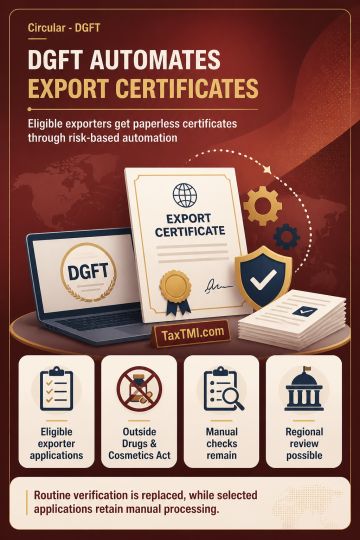
Automated Free Sale and Commerce Certificates enable paperless processing while retaining risk-based manual verification for selected exporter applica...
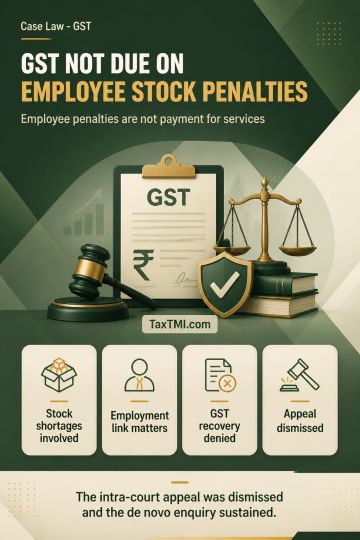
Employee stock-shortage penalties do not constitute consideration for services, preventing GST collection under Schedule II in employment relationship...
AAR held that the applicant is not entitled to preferential customs duty under APTA for imports involving third-party invoicing. It found that the APTA Rules of Origin (Rules 2-6, 8) require originating status, direct consignment, and a valid Certificate of Origin, but contain no substantive provision authorizing third-country invoicing or third-country trade. The reference to "third-party trade" in the Certificate of Origin completion notes and administrative Instruction No. 23/2024 was treated as merely procedural and incapable of enlarging treaty-based benefits. Applying strict construction of taxing statutes, AAR ruled that, absent explicit treaty authorization, third-party invoicing cannot support APTA preferential duty.
AAR held that the applicant is not entitled to preferential customs duty under APTA for imports involving third-party invoicing. It found that the APTA Rules of Origin (Rules 2-6, 8) require originating status, direct consignment, and a valid Certificate of Origin, but contain no substantive provision authorizing third-country invoicing or third-country trade. The reference to "third-party trade" in the Certificate of Origin completion notes and administrative Instruction No. 23/2024 was treated as merely procedural and incapable of enlarging treaty-based benefits. Applying strict construction of taxing statutes, AAR ruled that, absent explicit treaty authorization, third-party invoicing cannot support APTA preferential duty.
Note: It is a system-generated summary and is for quick reference only.
 TaxTMI
  TaxTMI
 of 4828











 Join Channel


