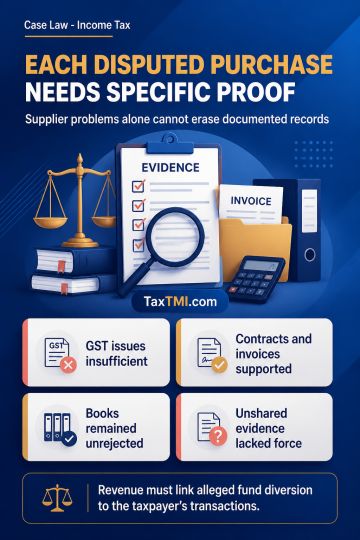
Natural justice in insolvency-professional discipline requires disclosed material; notices based on extraneous material and ignored defences are vitia...
Development rights transfers treated as immovable property, while construction abatement applies and repeated non-payment permits extended service-tax...
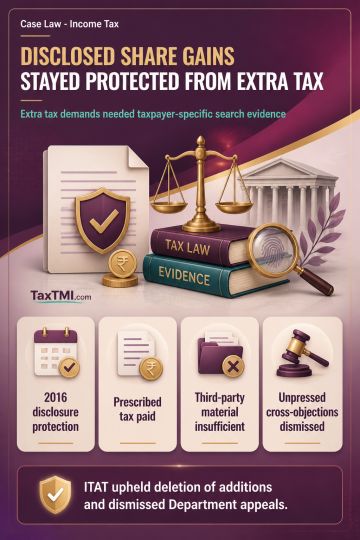
Income Disclosure Scheme immunity and search-material requirements barred further share-transaction additions in unabated assessments under section 15...
AAR held that the applicant is not entitled to preferential customs duty under APTA for imports involving third-party invoicing. It found that the APTA Rules of Origin (Rules 2-6, 8) require originating status, direct consignment, and a valid Certificate of Origin, but contain no substantive provision authorizing third-country invoicing or third-country trade. The reference to "third-party trade" in the Certificate of Origin completion notes and administrative Instruction No. 23/2024 was treated as merely procedural and incapable of enlarging treaty-based benefits. Applying strict construction of taxing statutes, AAR ruled that, absent explicit treaty authorization, third-party invoicing cannot support APTA preferential duty.
AAR held that the applicant is not entitled to preferential customs duty under APTA for imports involving third-party invoicing. It found that the APTA Rules of Origin (Rules 2-6, 8) require originating status, direct consignment, and a valid Certificate of Origin, but contain no substantive provision authorizing third-country invoicing or third-country trade. The reference to "third-party trade" in the Certificate of Origin completion notes and administrative Instruction No. 23/2024 was treated as merely procedural and incapable of enlarging treaty-based benefits. Applying strict construction of taxing statutes, AAR ruled that, absent explicit treaty authorization, third-party invoicing cannot support APTA preferential duty.
Note: It is a system-generated summary and is for quick reference only.
 TaxTMI
  TaxTMI
 of 4828










 Join Channel