Service of notice and contractual debt acknowledgment preserved insolvency admission against a corporate guarantor despite limitation and natural just...
Original works exemption excludes standalone boulder transportation, leaving subcontracted railway-project transport services subject to service tax l...
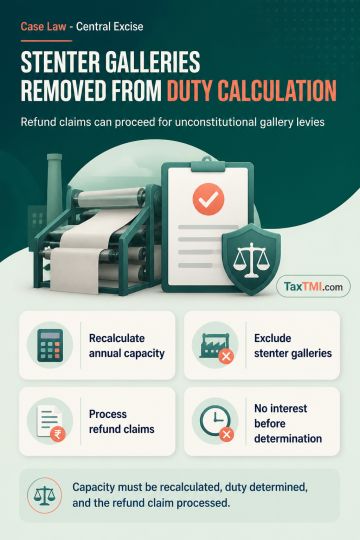
Annual production capacity determinations excluding stenter galleries support refunds for unconstitutional excise levies without an unjust-enrichment ...
Vicarious liability for cheque dishonour requires specific allegations of responsibility and cheque signatory; generic director allegations cannot sus...
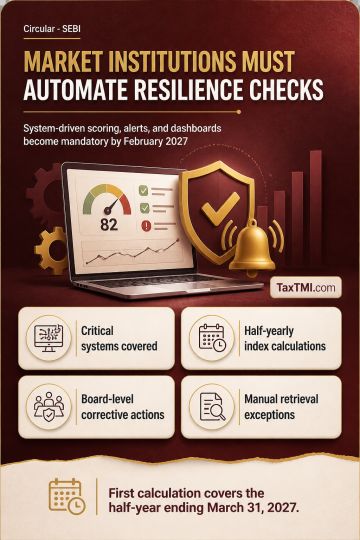
IT Resilience Index requires market infrastructure institutions to automate resilience scoring, early warnings, and continuous service-delivery monito...
AAR held that the applicant is not entitled to preferential customs duty under APTA for imports involving third-party invoicing. It found that the APTA Rules of Origin (Rules 2-6, 8) require originating status, direct consignment, and a valid Certificate of Origin, but contain no substantive provision authorizing third-country invoicing or third-country trade. The reference to "third-party trade" in the Certificate of Origin completion notes and administrative Instruction No. 23/2024 was treated as merely procedural and incapable of enlarging treaty-based benefits. Applying strict construction of taxing statutes, AAR ruled that, absent explicit treaty authorization, third-party invoicing cannot support APTA preferential duty.
AAR held that the applicant is not entitled to preferential customs duty under APTA for imports involving third-party invoicing. It found that the APTA Rules of Origin (Rules 2-6, 8) require originating status, direct consignment, and a valid Certificate of Origin, but contain no substantive provision authorizing third-country invoicing or third-country trade. The reference to "third-party trade" in the Certificate of Origin completion notes and administrative Instruction No. 23/2024 was treated as merely procedural and incapable of enlarging treaty-based benefits. Applying strict construction of taxing statutes, AAR ruled that, absent explicit treaty authorization, third-party invoicing cannot support APTA preferential duty.
Note: It is a system-generated summary and is for quick reference only.
 TaxTMI
  TaxTMI
 of 4828












 Join Channel