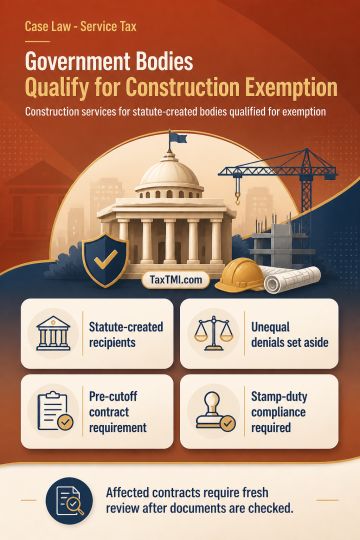
Governmental authority status supports construction-service exemption, while pre-cutoff contract and stamp-duty compliance requires verification on re...
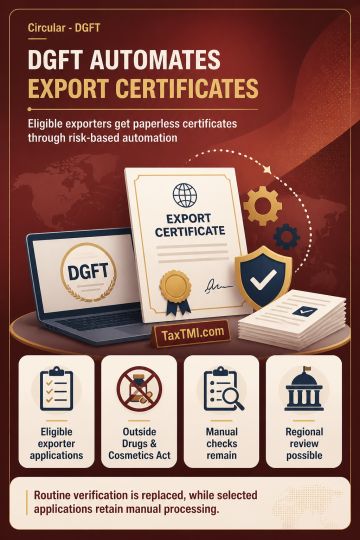
Automated Free Sale and Commerce Certificates enable paperless processing while retaining risk-based manual verification for selected exporter applica...
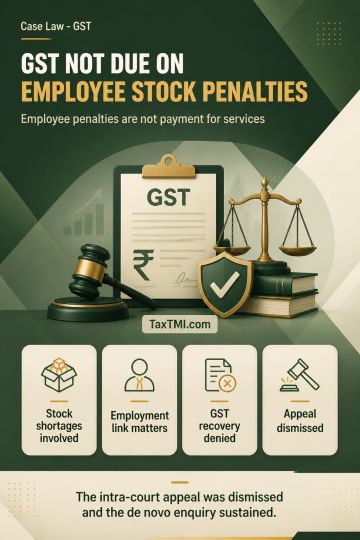
Employee stock-shortage penalties do not constitute consideration for services, preventing GST collection under Schedule II in employment relationship...
CESTAT allowed the appeal and set aside the impugned order denying exemption under AIFTA and imposing redemption fine under s.125 of the Customs Act, 1962. It held that the adjudicating authority, in de novo proceedings, exceeded its jurisdiction by fastening redemption fine when the original proceedings had not ordered redemption on payment of fine, reiterating that an appellant cannot be placed in a worse position for exercising appellate rights. The Tribunal found no allegation or finding that the goods did not originate in Thailand, nor any challenge to the authenticity or validity of the certificates of origin, rendering denial of exemption and consequent recovery under s.28 unsustainable.
CESTAT allowed the appeal and set aside the impugned order denying exemption under AIFTA and imposing redemption fine under s.125 of the Customs Act, 1962. It held that the adjudicating authority, in de novo proceedings, exceeded its jurisdiction by fastening redemption fine when the original proceedings had not ordered redemption on payment of fine, reiterating that an appellant cannot be placed in a worse position for exercising appellate rights. The Tribunal found no allegation or finding that the goods did not originate in Thailand, nor any challenge to the authenticity or validity of the certificates of origin, rendering denial of exemption and consequent recovery under s.28 unsustainable.
Note: It is a system-generated summary and is for quick reference only.
 TaxTMI
  TaxTMI
 of 4828







 Join Channel


