Educational approval requires mandatory State registration, but incidental surplus and trustee-owned land do not prove private benefit or profit motiv...
Judicial review of settlement orders cannot reopen settled customs notices, while statutory interest remains subject to verification and quantificatio...
Customs Broker licence lending for consideration justified revocation where exporter authorisation and client verification obligations were also breac...
Fraudulent import documents suspend limitation protection, while redemption of confiscated goods requires duty and interest despite bona fide purchase...
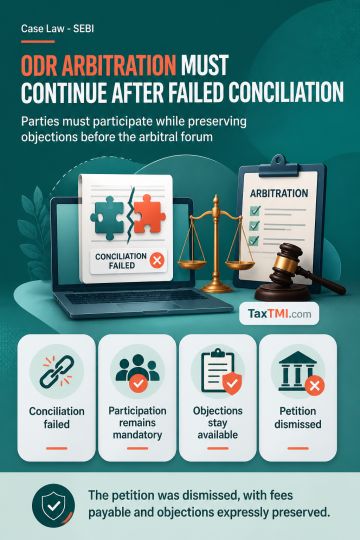
ODR arbitration participation remains mandatory after failed conciliation, while jurisdictional and maintainability objections stay available before t...
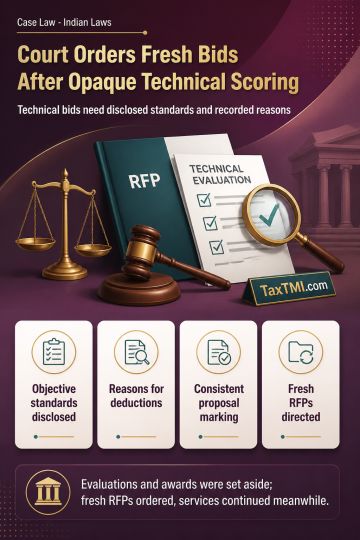
Transparency in technical bid evaluation requires disclosed standards and recorded reasons; opaque scoring invalidated tender awards and required fres...
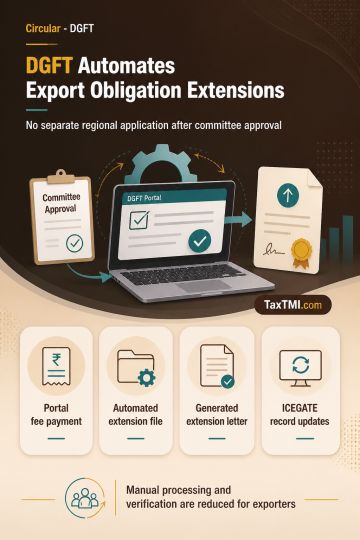
Automated export obligation extensions remove separate regional applications after committee approval for Advance Authorisation and EPCG authorisation...
Page of 4828
Press 'Enter' after typing page number.
441 to 460 of 96556 Results
❮
❯
❯❯
0 / 200
Expand Note
Add to Folder
No Folders have been created
+
Are you sure you want to delete "My most important" ?
CESTAT upheld absolute confiscation of 19 foreign-marked gold coins/bars and imposition of penalty under s.112(b)(i) of the Customs Act, 1962 on the appellant and its two partners. The Tribunal held that, as the seized goods were recovered from the appellant's possession and bore foreign markings, the statutory burden under s.123 lay on the appellant to prove lawful ownership and licit acquisition. The plea that the coins were 15-20 years old and used for worship was unsupported by any evidence. Finding no infirmity in the adjudication, the appeal was dismissed.
CESTAT upheld absolute confiscation of 19 foreign-marked gold coins/bars and imposition of penalty under s.112(b)(i) of the Customs Act, 1962 on the appellant and its two partners. The Tribunal held that, as the seized goods were recovered from the appellant's possession and bore foreign markings, the statutory burden under s.123 lay on the appellant to prove lawful ownership and licit acquisition. The plea that the coins were 15-20 years old and used for worship was unsupported by any evidence. Finding no infirmity in the adjudication, the appeal was dismissed.
Note: It is a system-generated summary and is for quick reference only.
 TaxTMI
  TaxTMI
 of 4828
















 Join Channel