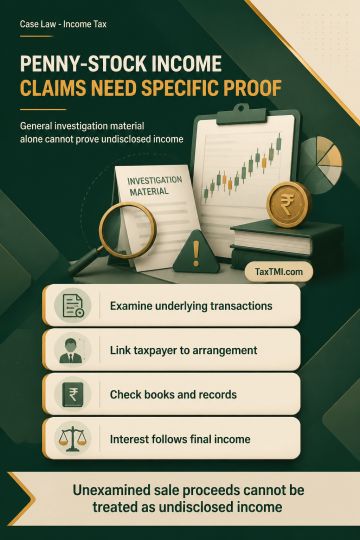
Penny-stock additions require transaction-specific evidence; general investigation material alone cannot establish undisclosed income or accommodation...
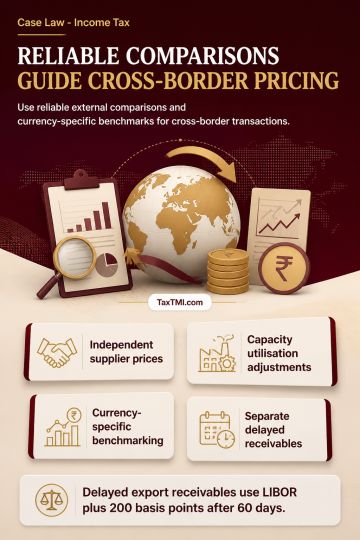
Transfer pricing comparability prioritises reliable external CUPs and foreign-currency LIBOR benchmarks for exports, borrowings and delayed receivable...
Section 153C satisfaction and seized electronic records sustained unexplained-investment addition, subject to proportionate ownership-share verificati...
CESTAT dismissed the customs appeals filed by the appellant challenging reassessment of bills of entry under Section 17(4) of the Customs Act, 1962. The Tribunal noted repeated non-appearance of the appellant/counsel and held that, in view of Section 129D(1A), no justification existed for granting adjournments beyond the statutory maximum of three, relying on SC precedent deprecating mechanical adjournments. On merits, following the jurisdictional HC ruling in a similar matter, CESTAT held that the appellant had unequivocally accepted the reassessment in writing, leaving no occasion for a further speaking order. The appeals were therefore dismissed both for non-prosecution and on merits.
CESTAT dismissed the customs appeals filed by the appellant challenging reassessment of bills of entry under Section 17(4) of the Customs Act, 1962. The Tribunal noted repeated non-appearance of the appellant/counsel and held that, in view of Section 129D(1A), no justification existed for granting adjournments beyond the statutory maximum of three, relying on SC precedent deprecating mechanical adjournments. On merits, following the jurisdictional HC ruling in a similar matter, CESTAT held that the appellant had unequivocally accepted the reassessment in writing, leaving no occasion for a further speaking order. The appeals were therefore dismissed both for non-prosecution and on merits.
Note: It is a system-generated summary and is for quick reference only.
 TaxTMI
  TaxTMI
 of 4828






 Join Channel


