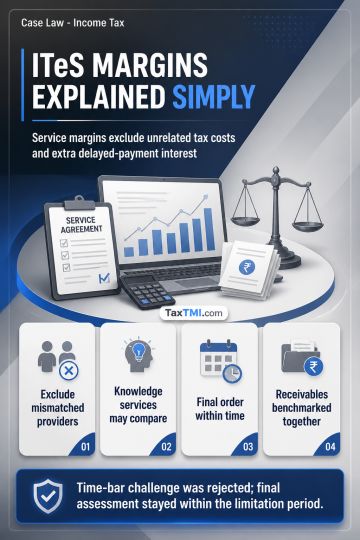
Transfer-pricing treatment of ITeS margins excludes pass-through tax recoveries and separate delayed-receivables interest after working-capital adjust...
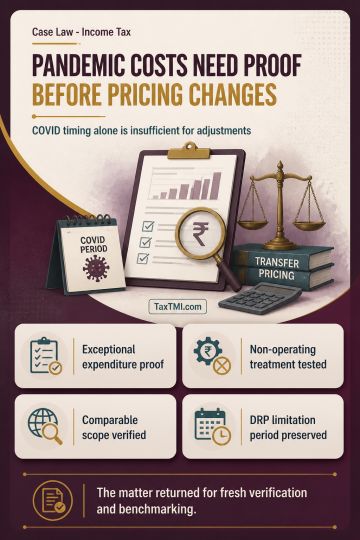
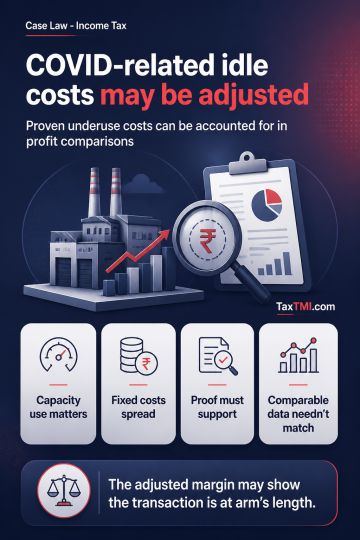
Capacity-utilisation adjustments under TNMM can neutralise substantiated COVID-related idle costs where underutilisation materially affects profitabil...
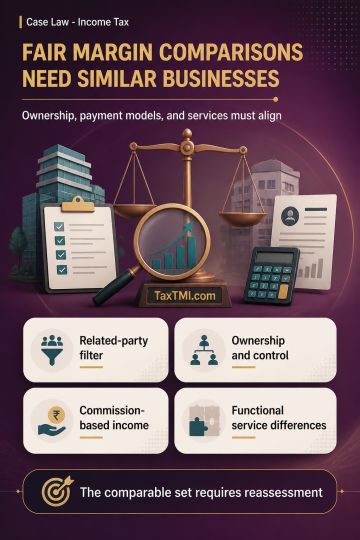
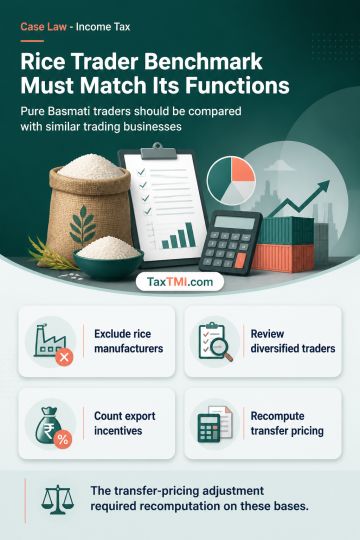
TNMM functional comparability requires excluding rice manufacturers from a pure Basmati rice trader's benchmark and recognising operating export recei...
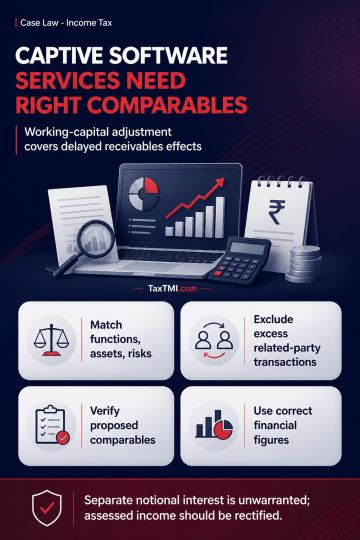
Working-capital adjustment subsumes delayed-receivable effects in TNMM benchmarking of captive software-development services, avoiding separate notion...
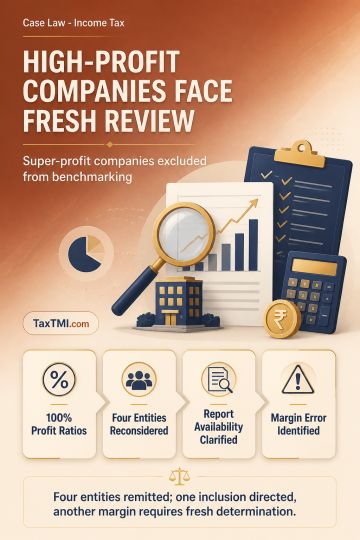
Transfer-pricing comparability requires exclusion of financially illogical super-profit comparables and correction of unsupported annual-report and ma...
Charitable character assessment preserves Section 80G approval despite inclusive spiritual teachings and incidental religious expenditure within the s...
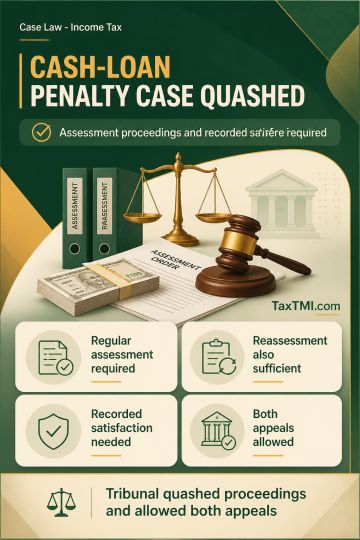
Penalty proceedings for cash-loan acceptance require assessment proceedings and recorded Assessing Officer satisfaction; absent these, the proceedings...
Page of 4827
Press 'Enter' after typing page number.
141 to 160 of 96536 Results
❮
❯
❯❯
0 / 200
Expand Note
Add to Folder
No Folders have been created
+
Are you sure you want to delete "My most important" ?
NCLAT dismissed the appeal challenging rejection of a CIRP petition, holding that the appellant is not a "Financial Creditor" under the IBC. Examining the Reseller Agreement, the Tribunal found no disbursement of money as a loan, no obligation of repayment with interest, and no element of time value of money as required under Section 5(8) IBC. The arrangement was characterized as a commercial collaboration and revenue-sharing model linked to resale of goods on an online platform, with contingent, profit-based returns rather than assured interest. The Tribunal held the alleged debt does not qualify as "financial debt"; consequently, the insolvency proceedings were not maintainable and the appeal was rejected.
NCLAT dismissed the appeal challenging rejection of a CIRP petition, holding that the appellant is not a "Financial Creditor" under the IBC. Examining the Reseller Agreement, the Tribunal found no disbursement of money as a loan, no obligation of repayment with interest, and no element of time value of money as required under Section 5(8) IBC. The arrangement was characterized as a commercial collaboration and revenue-sharing model linked to resale of goods on an online platform, with contingent, profit-based returns rather than assured interest. The Tribunal held the alleged debt does not qualify as "financial debt"; consequently, the insolvency proceedings were not maintainable and the appeal was rejected.
Note: It is a system-generated summary and is for quick reference only.
 TaxTMI
  TaxTMI
 of 4827




 Join Channel