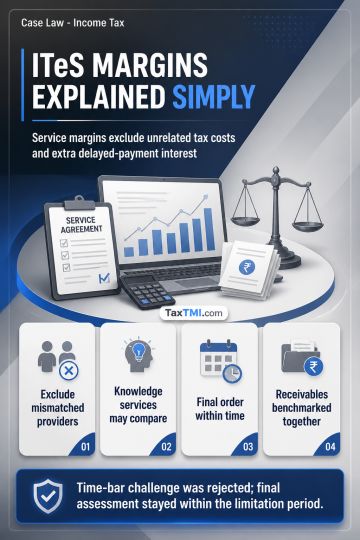
Transfer-pricing treatment of ITeS margins excludes pass-through tax recoveries and separate delayed-receivables interest after working-capital adjust...
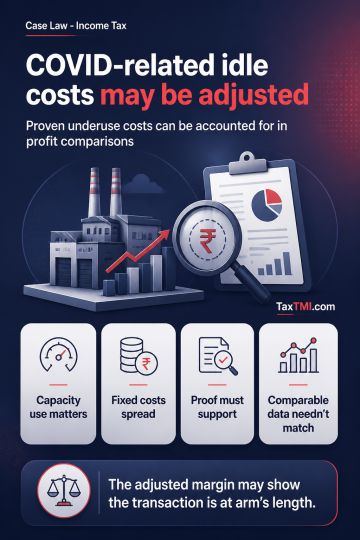
Capacity-utilisation adjustments under TNMM can neutralise substantiated COVID-related idle costs where underutilisation materially affects profitabil...
TNMM functional comparability requires excluding rice manufacturers from a pure Basmati rice trader's benchmark and recognising operating export recei...
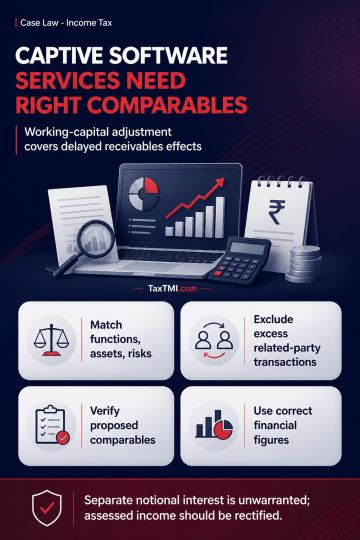
Working-capital adjustment subsumes delayed-receivable effects in TNMM benchmarking of captive software-development services, avoiding separate notion...
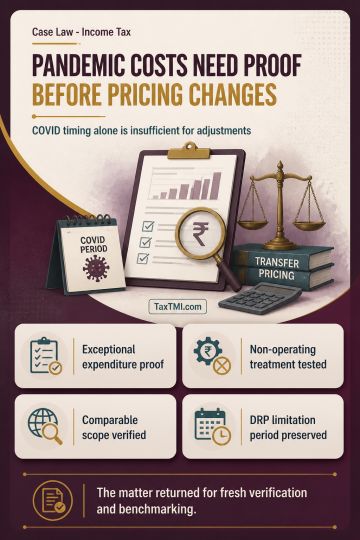
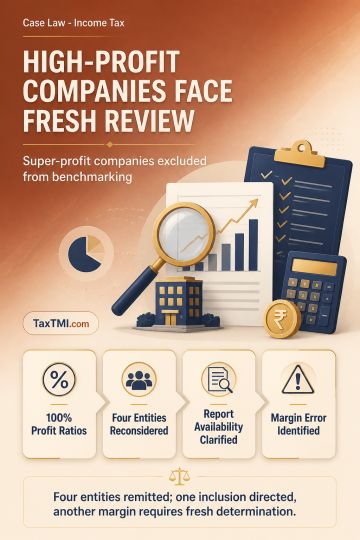
Transfer-pricing comparability requires exclusion of financially illogical super-profit comparables and correction of unsupported annual-report and ma...
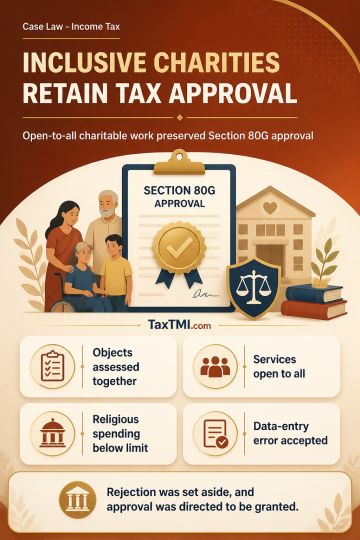
Charitable character assessment preserves Section 80G approval despite inclusive spiritual teachings and incidental religious expenditure within the s...
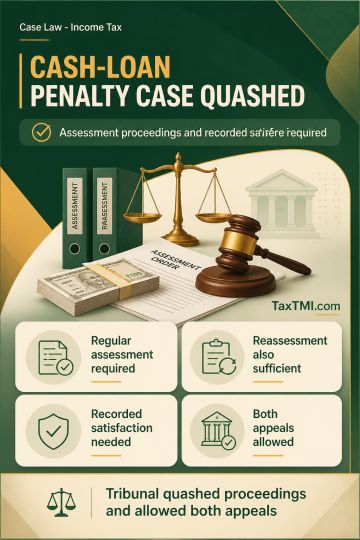
Penalty proceedings for cash-loan acceptance require assessment proceedings and recorded Assessing Officer satisfaction; absent these, the proceedings...
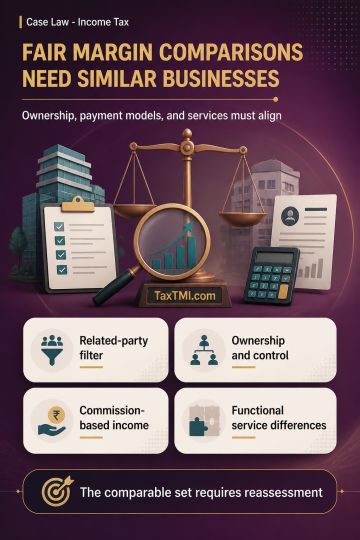
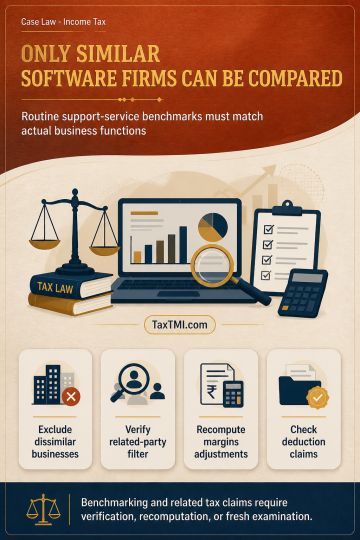
Functional comparability governs software-service benchmarking: dissimilar companies are excluded, while related-party filters, margins and working-ca...
ITAT allowed the assessee's appeal and quashed the assessment order u/s 143(3) r/w 144B and the rectification order u/s 154. It held that the AO, having invoked s.50C(2), was bound to await the DVO's report and follow the procedure incorporating s.16A of the Wealth-tax Act, including affording the assessee an opportunity of being heard. Proceeding on stamp duty valuation without the DVO's determination violated the mandatory procedural safeguard and principles of natural justice, rendering the assessment unsustainable. ITAT further held that the CIT(A) failed to deal with cited precedents and denied effective opportunity regarding cost and expense claims, vitiating the appellate order.
ITAT allowed the assessee's appeal and quashed the assessment order u/s 143(3) r/w 144B and the rectification order u/s 154. It held that the AO, having invoked s.50C(2), was bound to await the DVO's report and follow the procedure incorporating s.16A of the Wealth-tax Act, including affording the assessee an opportunity of being heard. Proceeding on stamp duty valuation without the DVO's determination violated the mandatory procedural safeguard and principles of natural justice, rendering the assessment unsustainable. ITAT further held that the CIT(A) failed to deal with cited precedents and denied effective opportunity regarding cost and expense claims, vitiating the appellate order.
Note: It is a system-generated summary and is for quick reference only.
 TaxTMI
  TaxTMI
 of 4826






 Join Channel


