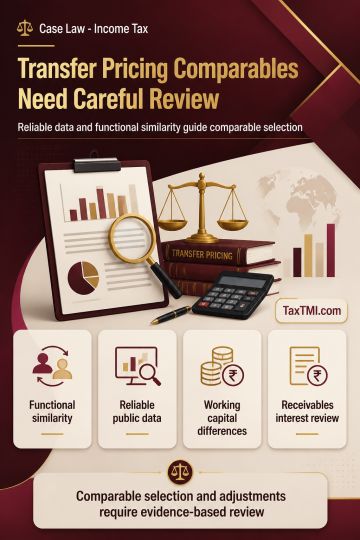
Transfer pricing comparability requires functional alignment, reliable financial data, and careful review of working capital and receivables adjustmen...
Transfer pricing rules require benchmarking corporate guarantees and associated-enterprise advances, while invalid domestic-transaction adjustments ca...
Prospective sugar export prohibition required registered letters of credit; private contracts and export quotas created no enforceable continuation ri...
Retroactive interim-moratorium exclusion permits protective asset disclosure and preservation measures against personal guarantors pending arbitration...
The HC held that the impugned assessment order confirming tax demand of Rs. 6,93,77,821/-, in excess of the sum of Rs. 2,49,63,816/- proposed in the show-cause notice, was contrary to s.75(7) KGST Act and violative of principles of natural justice. It observed that the authority could not travel beyond the quantification in the SCN and that the rectification application was wrongly rejected on jurisdictional grounds. Consequently, the HC set aside the impugned order-in-original and the consequential order (Annexures-A and A1) and remanded the matter to the jurisdictional authority (R-3) for fresh consideration and reassessment strictly in accordance with law, after affording due opportunity of hearing to the petitioner. The petition was allowed by way of remand.
The HC held that the impugned assessment order confirming tax demand of Rs. 6,93,77,821/-, in excess of the sum of Rs. 2,49,63,816/- proposed in the show-cause notice, was contrary to s.75(7) KGST Act and violative of principles of natural justice. It observed that the authority could not travel beyond the quantification in the SCN and that the rectification application was wrongly rejected on jurisdictional grounds. Consequently, the HC set aside the impugned order-in-original and the consequential order (Annexures-A and A1) and remanded the matter to the jurisdictional authority (R-3) for fresh consideration and reassessment strictly in accordance with law, after affording due opportunity of hearing to the petitioner. The petition was allowed by way of remand.
Note: It is a system-generated summary and is for quick reference only.
 TaxTMI
 of 4782


















 Join Channel


 TaxTMI