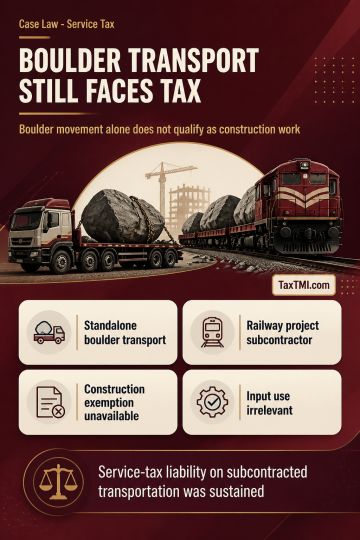
Original works exemption excludes standalone boulder transportation, leaving subcontracted railway-project transport services subject to service tax l...
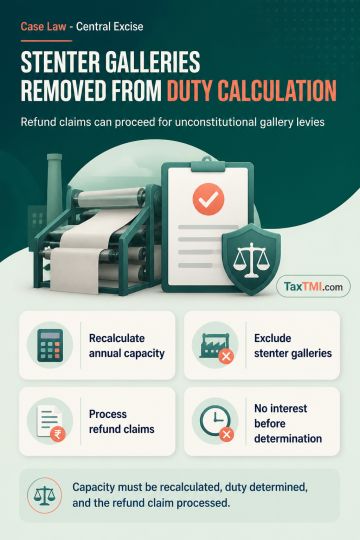
Annual production capacity determinations excluding stenter galleries support refunds for unconstitutional excise levies without an unjust-enrichment ...
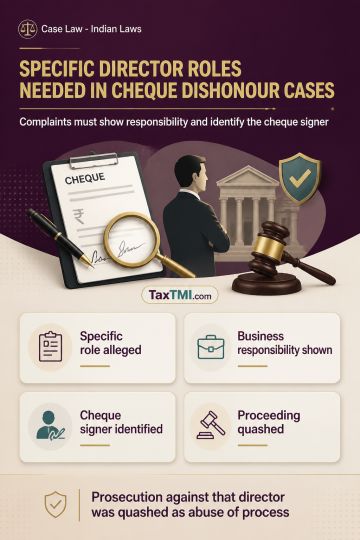
Vicarious liability for cheque dishonour requires specific allegations of responsibility and cheque signatory; generic director allegations cannot sus...
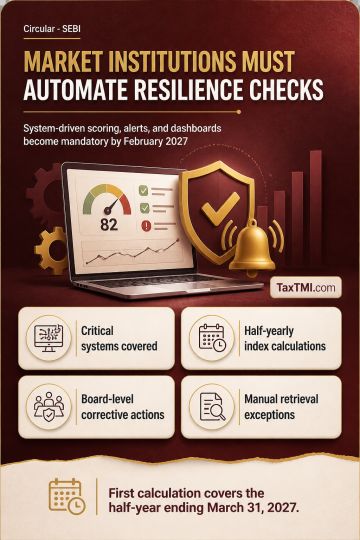
IT Resilience Index requires market infrastructure institutions to automate resilience scoring, early warnings, and continuous service-delivery monito...
The CESTAT allowed the appeal filed by the assessee (A) and set aside the impugned order of the Commr (A). It held that the invocation of the extended period of limitation under the proviso to s.73(1) of the Finance Act for non-payment of service tax on car parking charges was unsustainable. The Tribunal observed that mere contravention of statutory provisions while filing self-assessed returns, without any positive act indicating fraud, collusion, wilful misstatement or deliberate suppression of facts with intent to evade tax, does not justify recourse to the extended limitation. As the SCN and record did not establish a conscious intent to evade service tax, the preconditions for applying the extended five-year period were not met. Consequently, the demand raised beyond the normal limitation period, along with related consequences, was quashed, and relief was granted to A.
The CESTAT allowed the appeal filed by the assessee (A) and set aside the impugned order of the Commr (A). It held that the invocation of the extended period of limitation under the proviso to s.73(1) of the Finance Act for non-payment of service tax on car parking charges was unsustainable. The Tribunal observed that mere contravention of statutory provisions while filing self-assessed returns, without any positive act indicating fraud, collusion, wilful misstatement or deliberate suppression of facts with intent to evade tax, does not justify recourse to the extended limitation. As the SCN and record did not establish a conscious intent to evade service tax, the preconditions for applying the extended five-year period were not met. Consequently, the demand raised beyond the normal limitation period, along with related consequences, was quashed, and relief was granted to A.
Note: It is a system-generated summary and is for quick reference only.
 TaxTMI
  TaxTMI
 of 4830




 Join Channel


