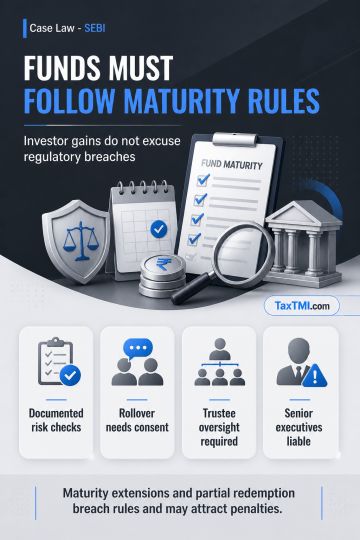
Mutual fund maturity rules require proper rollover, redemption, disclosure, and due diligence; investor gains cannot excuse regulatory breaches or pen...
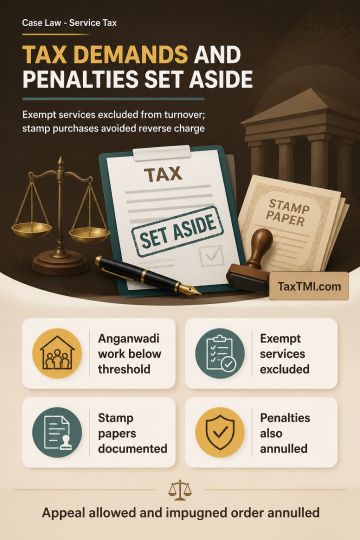
Threshold exemption excludes exempt services, while stamp-paper purchases avoid reverse charge; consequential service tax penalties were also set asid...
Employee conflict disclosures and investment restrictions expand with new recusal duties, post-employment limits, and compliance reporting requirement...
ITAT held that, under S.32 read with S.43(6)(c) and Rule 5, depreciation is governed by the "block of assets" concept and the individual identity of a depreciable asset is extinguished once it forms part of the block. In the case of Assessee X, the motor car was part of the "Motor Cars" block (15%), and the sale consideration of Rs. 5,60,000 had already been reduced from the block while computing depreciation in the return. ITAT held that no separate taxable profit arises on sale of an individual asset within the block and that taxing the book profit of Rs. 4,83,894 amounted to impermissible double taxation. As the AO cited no enabling provision and CIT(A) gave no cogent reasoning, the addition was deleted. Appeal allowed in favour of Assessee X.
ITAT held that, under S.32 read with S.43(6)(c) and Rule 5, depreciation is governed by the "block of assets" concept and the individual identity of a depreciable asset is extinguished once it forms part of the block. In the case of Assessee X, the motor car was part of the "Motor Cars" block (15%), and the sale consideration of Rs. 5,60,000 had already been reduced from the block while computing depreciation in the return. ITAT held that no separate taxable profit arises on sale of an individual asset within the block and that taxing the book profit of Rs. 4,83,894 amounted to impermissible double taxation. As the AO cited no enabling provision and CIT(A) gave no cogent reasoning, the addition was deleted. Appeal allowed in favour of Assessee X.
Note: It is a system-generated summary and is for quick reference only.
 TaxTMI
 of 4801











 Join Channel


 TaxTMI
