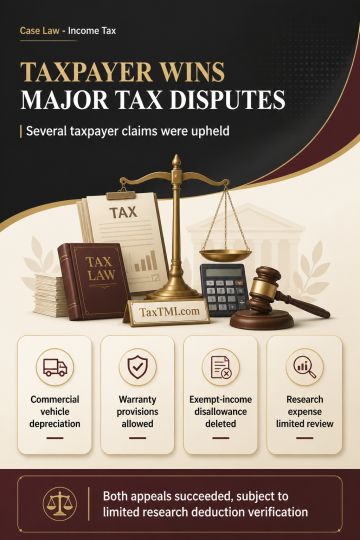
Commercial vehicle depreciation, scientifically determined warranty provisions and exempt-income disallowances were resolved in favour of the taxpayer...
Inherited property sale proceeds require capital-gains treatment where ownership is supported by evidence, not suspicion or unverified signature doubt...
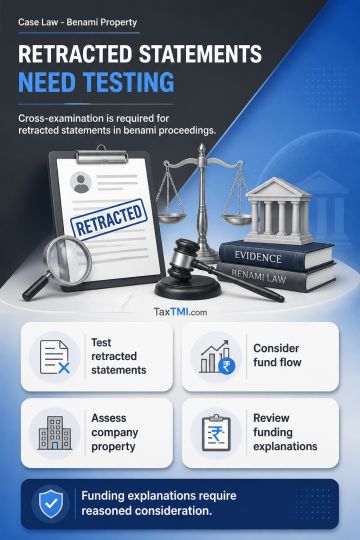
Cross-examination of retracted statements is essential where foundational evidence supports a benami allegation and documented funding explanations re...
Capital-goods exemption covers plant-modernisation accessories, while the import restriction applies only to earlier capital-goods components and spar...
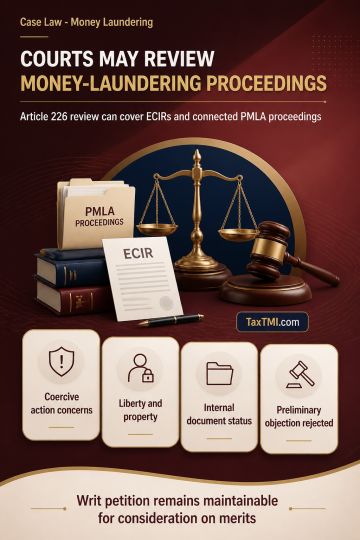
Constitutional judicial review permits challenges to ECIRs and connected money-laundering proceedings where coercive action affects fundamental intere...
CESTAT upheld the findings of the Adjudicating Authority and Commr (A) that 449 gas cylinders illicitly removed from ship-breaking yards, contrary to Gas Cylinder Rules, 2016 and related regulations, were liable to confiscation under Ss. 111(d) and 111(j) of the Customs Act, 1962, and that penalty on the appellant under S. 112(a) and (b) for abetment was correctly imposed. The Tribunal held that the appellant, though engaged in low-margin business, had violated the mandatory undertaking regarding destruction of cylinders and thus attracted confiscation and penalty. However, exercising discretion, CESTAT further reduced the redemption fine from Rs. 1,40,000 to Rs. 40,000. The appeal was partly allowed to this limited extent and otherwise dismissed.
CESTAT upheld the findings of the Adjudicating Authority and Commr (A) that 449 gas cylinders illicitly removed from ship-breaking yards, contrary to Gas Cylinder Rules, 2016 and related regulations, were liable to confiscation under Ss. 111(d) and 111(j) of the Customs Act, 1962, and that penalty on the appellant under S. 112(a) and (b) for abetment was correctly imposed. The Tribunal held that the appellant, though engaged in low-margin business, had violated the mandatory undertaking regarding destruction of cylinders and thus attracted confiscation and penalty. However, exercising discretion, CESTAT further reduced the redemption fine from Rs. 1,40,000 to Rs. 40,000. The appeal was partly allowed to this limited extent and otherwise dismissed.
Note: It is a system-generated summary and is for quick reference only.
 TaxTMI
 of 4782










 Join Channel


 TaxTMI
