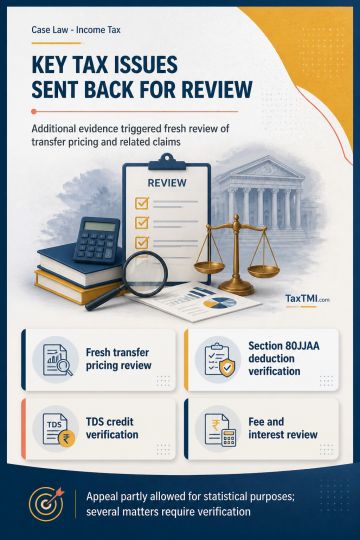
Additional evidence in transfer pricing dispute leads to fresh examination, while tax deductions, TDS credit, fee and refund interest require verifica...
Category II AIF pass-through taxation preserves non-business income character; investment receipts cannot be reclassified without applying recognised ...
Mutual fund maturity rules require proper rollover, redemption, disclosure, and due diligence; investor gains cannot excuse regulatory breaches or pen...
Threshold exemption excludes exempt services, while stamp-paper purchases avoid reverse charge; consequential service tax penalties were also set asid...
Employee conflict disclosures and investment restrictions expand with new recusal duties, post-employment limits, and compliance reporting requirement...
NCLAT upheld the Adjudicating Authority's order, holding that the movables and inventory lying in the leased premises formed part of the liquidation estate of the corporate debtor under S.36 IBC. The burden to rebut the presumption of ownership lay on the appellant, who failed to produce credible contemporaneous evidence before the Adjudicating Authority or NCLAT, including invoices supporting the SAP records. NCLAT noted the appellant's prolonged inaction and held there was tacit acquiescence to the corporate debtor's ownership, especially as the appellant, a signatory to the SPA, had opportunity to object during CIRP and liquidation. As the assets were already sold, sale certificate issued, and proceeds distributed, NCLAT found no infirmity or ground for interference and dismissed the appeal.
NCLAT upheld the Adjudicating Authority's order, holding that the movables and inventory lying in the leased premises formed part of the liquidation estate of the corporate debtor under S.36 IBC. The burden to rebut the presumption of ownership lay on the appellant, who failed to produce credible contemporaneous evidence before the Adjudicating Authority or NCLAT, including invoices supporting the SAP records. NCLAT noted the appellant's prolonged inaction and held there was tacit acquiescence to the corporate debtor's ownership, especially as the appellant, a signatory to the SPA, had opportunity to object during CIRP and liquidation. As the assets were already sold, sale certificate issued, and proceeds distributed, NCLAT found no infirmity or ground for interference and dismissed the appeal.
Note: It is a system-generated summary and is for quick reference only.
 TaxTMI
 of 4803


















 Join Channel


 TaxTMI
