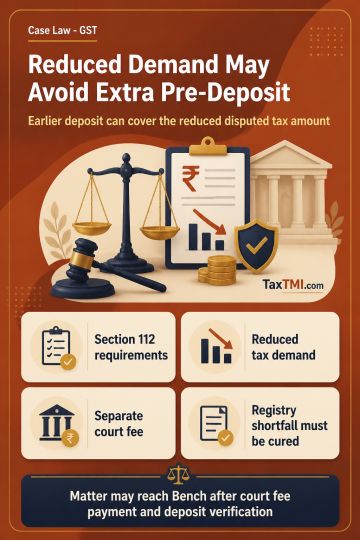
Captive transfer pricing relies on industrial consumer tariffs, while genuine quotations can benchmark effluent treatment transfers under the Other Me...
Specific tariff classification for ophthalmic instruments and extended limitation principles determine the treatment of duty demands, confiscation, an...
Integrated golf function determines classification, placing launch monitors and simulators under other golf equipment rather than measuring instrument...
Public servant status under anti-corruption law extends to recognised stock exchange leadership; constitutional and sanction challenges do not succeed...
Acquiescence, homebuyer protection and clean-slate resolution principles prevent landowners from disrupting an integrated project through late termina...
NCLAT upheld the Adjudicating Authority's order, holding that the movables and inventory lying in the leased premises formed part of the liquidation estate of the corporate debtor under S.36 IBC. The burden to rebut the presumption of ownership lay on the appellant, who failed to produce credible contemporaneous evidence before the Adjudicating Authority or NCLAT, including invoices supporting the SAP records. NCLAT noted the appellant's prolonged inaction and held there was tacit acquiescence to the corporate debtor's ownership, especially as the appellant, a signatory to the SPA, had opportunity to object during CIRP and liquidation. As the assets were already sold, sale certificate issued, and proceeds distributed, NCLAT found no infirmity or ground for interference and dismissed the appeal.
NCLAT upheld the Adjudicating Authority's order, holding that the movables and inventory lying in the leased premises formed part of the liquidation estate of the corporate debtor under S.36 IBC. The burden to rebut the presumption of ownership lay on the appellant, who failed to produce credible contemporaneous evidence before the Adjudicating Authority or NCLAT, including invoices supporting the SAP records. NCLAT noted the appellant's prolonged inaction and held there was tacit acquiescence to the corporate debtor's ownership, especially as the appellant, a signatory to the SPA, had opportunity to object during CIRP and liquidation. As the assets were already sold, sale certificate issued, and proceeds distributed, NCLAT found no infirmity or ground for interference and dismissed the appeal.
Note: It is a system-generated summary and is for quick reference only.
 TaxTMI
 of 4803


















 Join Channel


 TaxTMI