Commercial vehicle depreciation, scientifically determined warranty provisions and exempt-income disallowances were resolved in favour of the taxpayer...
Inherited property sale proceeds require capital-gains treatment where ownership is supported by evidence, not suspicion or unverified signature doubt...
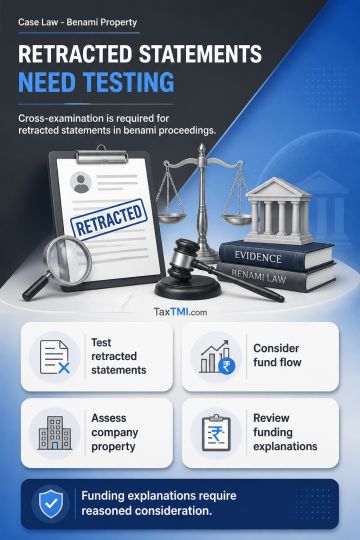
Cross-examination of retracted statements is essential where foundational evidence supports a benami allegation and documented funding explanations re...
Capital-goods exemption covers plant-modernisation accessories, while the import restriction applies only to earlier capital-goods components and spar...
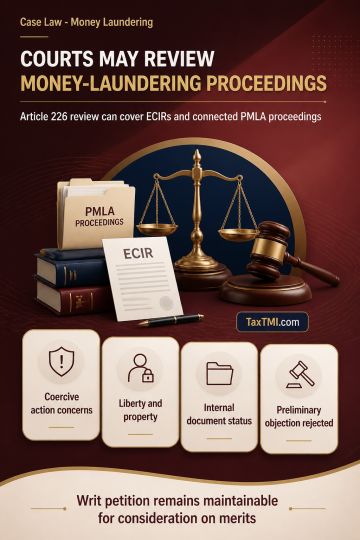
Constitutional judicial review permits challenges to ECIRs and connected money-laundering proceedings where coercive action affects fundamental intere...
NCLAT upheld the Adjudicating Authority's order, holding that the movables and inventory lying in the leased premises formed part of the liquidation estate of the corporate debtor under S.36 IBC. The burden to rebut the presumption of ownership lay on the appellant, who failed to produce credible contemporaneous evidence before the Adjudicating Authority or NCLAT, including invoices supporting the SAP records. NCLAT noted the appellant's prolonged inaction and held there was tacit acquiescence to the corporate debtor's ownership, especially as the appellant, a signatory to the SPA, had opportunity to object during CIRP and liquidation. As the assets were already sold, sale certificate issued, and proceeds distributed, NCLAT found no infirmity or ground for interference and dismissed the appeal.
NCLAT upheld the Adjudicating Authority's order, holding that the movables and inventory lying in the leased premises formed part of the liquidation estate of the corporate debtor under S.36 IBC. The burden to rebut the presumption of ownership lay on the appellant, who failed to produce credible contemporaneous evidence before the Adjudicating Authority or NCLAT, including invoices supporting the SAP records. NCLAT noted the appellant's prolonged inaction and held there was tacit acquiescence to the corporate debtor's ownership, especially as the appellant, a signatory to the SPA, had opportunity to object during CIRP and liquidation. As the assets were already sold, sale certificate issued, and proceeds distributed, NCLAT found no infirmity or ground for interference and dismissed the appeal.
Note: It is a system-generated summary and is for quick reference only.
 TaxTMI
 of 4780



















 Join Channel


 TaxTMI
