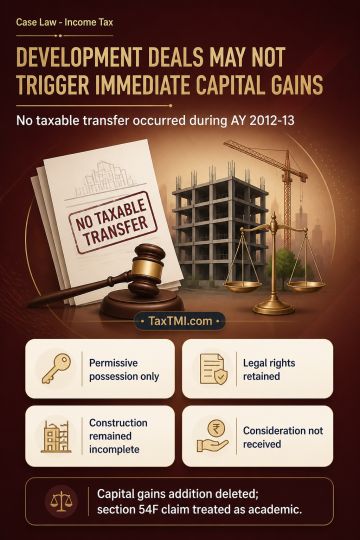
Development agreements require legal possession or effective enjoyment for capital gains transfer; permissive possession and deferred consideration de...
Prolonged sterilisation of development rights supports capital-gains treatment, while business-income disallowances cannot govern capital-gains comput...
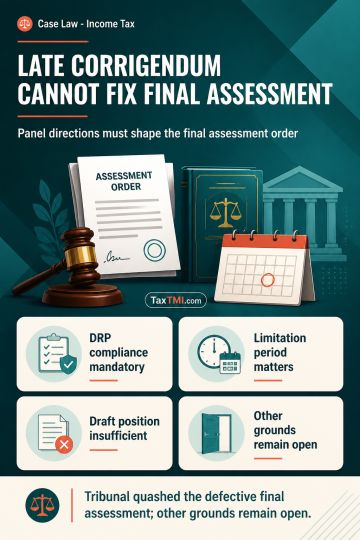
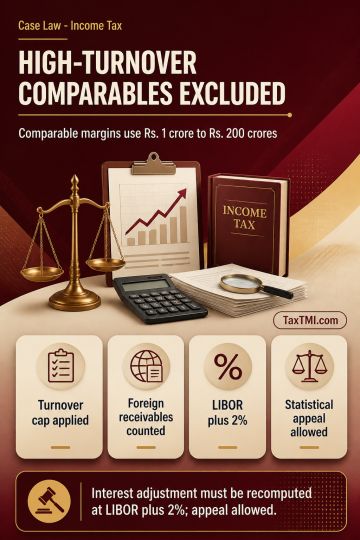
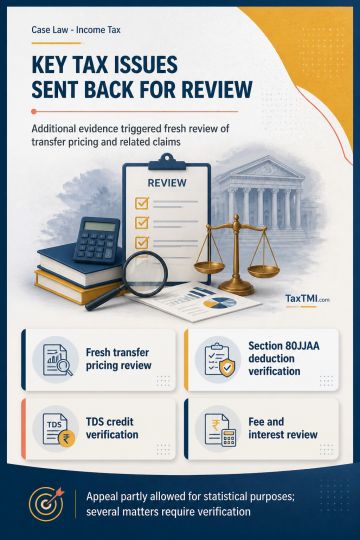
Additional evidence in transfer pricing dispute leads to fresh examination, while tax deductions, TDS credit, fee and refund interest require verifica...
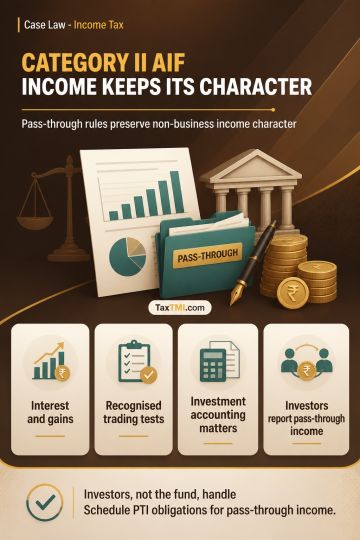
Category II AIF pass-through taxation preserves non-business income character; investment receipts cannot be reclassified without applying recognised ...
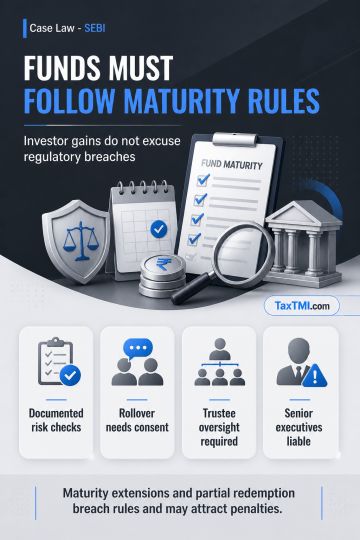
Mutual fund maturity rules require proper rollover, redemption, disclosure, and due diligence; investor gains cannot excuse regulatory breaches or pen...
HC held that, although the procedural requirements under s.68 and r.138 CGST Rules for movement of goods were ostensibly complied with and the vehicle was no longer in transit, the petitioner's conduct disentitled it to equitable relief under Art. 226. The record established that the petitioner, in collusion with others, had devised a systematic scheme to defraud the revenue by fabricating sham transactions and availing fraudulent input tax credit through bogus entities and fictitious outward liabilities, exploiting systemic gaps in the GST framework. HC declined to interfere with the seizure and detention proceedings, refused the relief of release of goods and conveyance, and dismissed the writ petition with costs of Rs. 5,00,000 to be recovered from the petitioner-company through its Director.
HC held that, although the procedural requirements under s.68 and r.138 CGST Rules for movement of goods were ostensibly complied with and the vehicle was no longer in transit, the petitioner's conduct disentitled it to equitable relief under Art. 226. The record established that the petitioner, in collusion with others, had devised a systematic scheme to defraud the revenue by fabricating sham transactions and availing fraudulent input tax credit through bogus entities and fictitious outward liabilities, exploiting systemic gaps in the GST framework. HC declined to interfere with the seizure and detention proceedings, refused the relief of release of goods and conveyance, and dismissed the writ petition with costs of Rs. 5,00,000 to be recovered from the petitioner-company through its Director.
Note: It is a system-generated summary and is for quick reference only.
 TaxTMI
 of 4798








 Join Channel


 TaxTMI
