Service of notice and contractual debt acknowledgment preserved insolvency admission against a corporate guarantor despite limitation and natural just...
Original works exemption excludes standalone boulder transportation, leaving subcontracted railway-project transport services subject to service tax l...
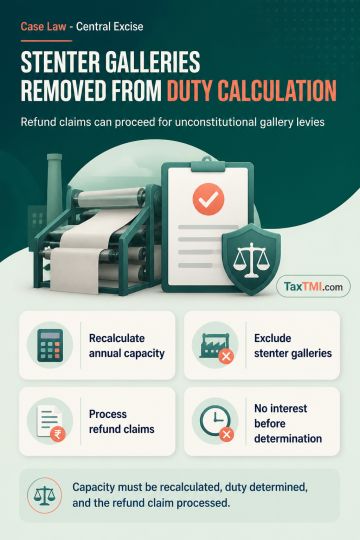
Annual production capacity determinations excluding stenter galleries support refunds for unconstitutional excise levies without an unjust-enrichment ...
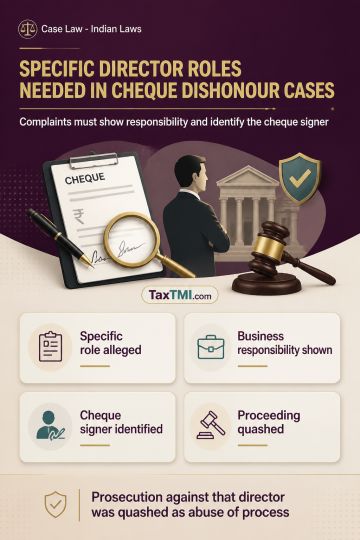
Vicarious liability for cheque dishonour requires specific allegations of responsibility and cheque signatory; generic director allegations cannot sus...
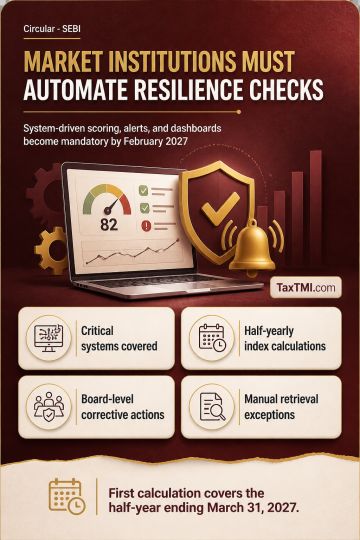
IT Resilience Index requires market infrastructure institutions to automate resilience scoring, early warnings, and continuous service-delivery monito...
HC held that the appellant-employer could not be treated as an "assessee in default" under s.201(1) for non-deduction of TDS under s.192 on Leave Travel Concession reimbursements for AY 2016-17. In view of subsisting interim directions of the Madras HC during the relevant financial year, the appellant had no operative obligation to deduct tax "at the time of payment," a precondition for invoking s.201. Consequently, interest under s.201(1A) was also held inapplicable. HC further noted that the first proviso to s.201(1) protects a payer where the payee has duly accounted for such amounts in the return of income. Earlier adverse findings of the SC for a different assessment year were distinguished. The appeal was allowed in favour of the assessee.
HC held that the appellant-employer could not be treated as an "assessee in default" under s.201(1) for non-deduction of TDS under s.192 on Leave Travel Concession reimbursements for AY 2016-17. In view of subsisting interim directions of the Madras HC during the relevant financial year, the appellant had no operative obligation to deduct tax "at the time of payment," a precondition for invoking s.201. Consequently, interest under s.201(1A) was also held inapplicable. HC further noted that the first proviso to s.201(1) protects a payer where the payee has duly accounted for such amounts in the return of income. Earlier adverse findings of the SC for a different assessment year were distinguished. The appeal was allowed in favour of the assessee.
Note: It is a system-generated summary and is for quick reference only.
 TaxTMI
  TaxTMI
 of 4828












 Join Channel