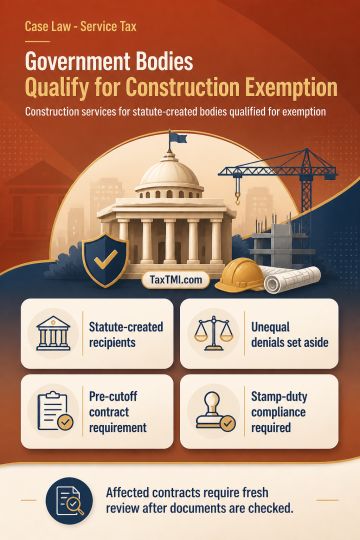
Governmental authority status supports construction-service exemption, while pre-cutoff contract and stamp-duty compliance requires verification on re...
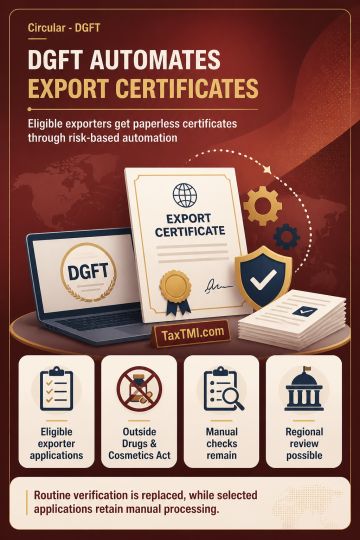
Automated Free Sale and Commerce Certificates enable paperless processing while retaining risk-based manual verification for selected exporter applica...
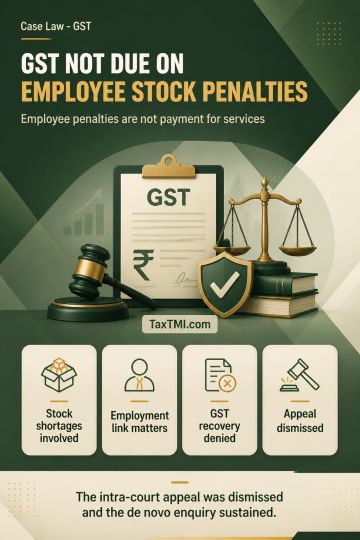
Employee stock-shortage penalties do not constitute consideration for services, preventing GST collection under Schedule II in employment relationship...
CESTAT examined penalties imposed on the appellants, acting as high sea sellers and job workers, under s.112(b) of the Customs Act, 1962 for allegedly colluding with the importer to evade duty and wrongfully claim exemption on imported LCC paper rolls. The Tribunal held that penalty under s.112(b) requires clear proof of mens rea, i.e., that the person "knew or had reason to believe" the goods were liable to confiscation under s.111. The Dept. failed to adduce any evidence that the appellants had knowledge of, or participated in, the importer's fraud. Job-work documents were not found defective. CESTAT therefore set aside the penalties and allowed the appeals.
CESTAT examined penalties imposed on the appellants, acting as high sea sellers and job workers, under s.112(b) of the Customs Act, 1962 for allegedly colluding with the importer to evade duty and wrongfully claim exemption on imported LCC paper rolls. The Tribunal held that penalty under s.112(b) requires clear proof of mens rea, i.e., that the person "knew or had reason to believe" the goods were liable to confiscation under s.111. The Dept. failed to adduce any evidence that the appellants had knowledge of, or participated in, the importer's fraud. Job-work documents were not found defective. CESTAT therefore set aside the penalties and allowed the appeals.
Note: It is a system-generated summary and is for quick reference only.
 TaxTMI
  TaxTMI
 of 4827




 Join Channel


