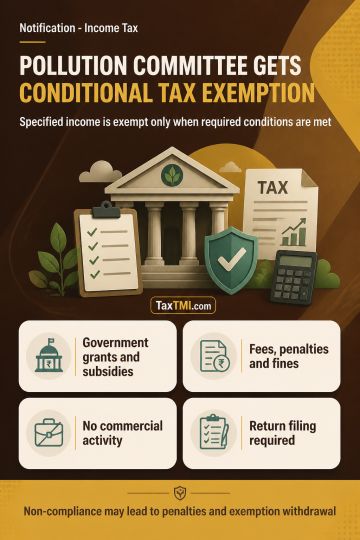
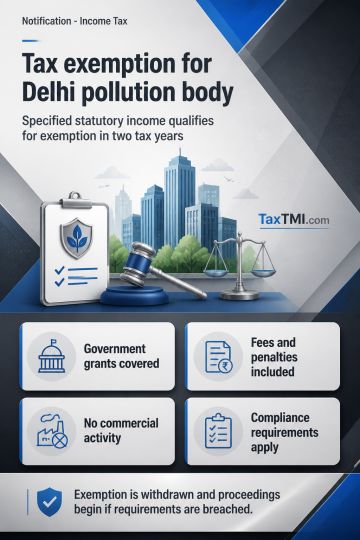
Specified income tax exemption for pollution control body remains conditional on non-commercial activity, unchanged income character, and return filin...
Jurisdictional facts in certificate-of-origin discrepancies can support customs show-cause proceedings, leaving factual explanations for departmental ...
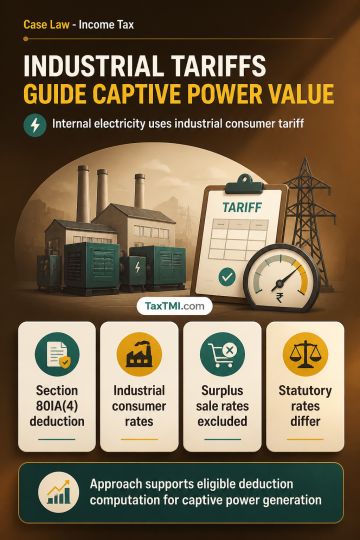
Market value for captive electricity consumption follows industrial consumer tariffs, supporting profit computation for the power generation deduction...
AAR held that renting of residential dwellings by unregistered landlords to the applicant, a registered entity, constitutes a taxable supply of services to the applicant under GST. The employer-employee relationship applies only between the applicant and its employees, not between the landlords and the applicant; therefore, the exemption for residential dwelling services is inapplicable. Consequently, GST is payable by the applicant under the Reverse Charge Mechanism on rent paid to unregistered landlords. Further, AAR held that, in view of s.17(2) read with s.2(47), the applicant is not eligible to claim ITC on GST paid under reverse charge, as the corresponding outward supply to employees is an exempt supply.
AAR held that renting of residential dwellings by unregistered landlords to the applicant, a registered entity, constitutes a taxable supply of services to the applicant under GST. The employer-employee relationship applies only between the applicant and its employees, not between the landlords and the applicant; therefore, the exemption for residential dwelling services is inapplicable. Consequently, GST is payable by the applicant under the Reverse Charge Mechanism on rent paid to unregistered landlords. Further, AAR held that, in view of s.17(2) read with s.2(47), the applicant is not eligible to claim ITC on GST paid under reverse charge, as the corresponding outward supply to employees is an exempt supply.
Note: It is a system-generated summary and is for quick reference only.
 TaxTMI
 of 4803








 Join Channel


 TaxTMI
