Defined public benefit can retain charitable character; registration renewal requires examining genuine activities and legal compliance, not surplus a...
Capital reduction is distinct from share buy-back, preventing buy-back tax; restructuring interest and related business deductions also survive scruti...
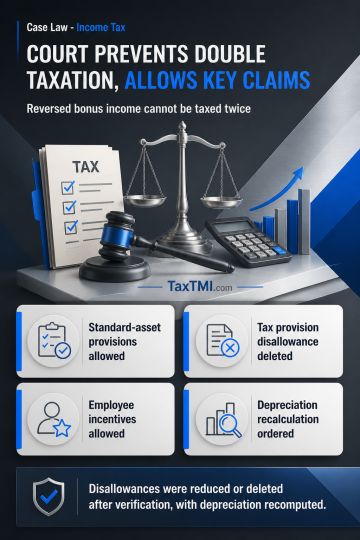
Transfer pricing and tax deductions upheld on established principles, while employee contributions and warranty provisions returned for fresh examinat...
Captive transfer pricing relies on industrial consumer tariffs, while genuine quotations can benchmark effluent treatment transfers under the Other Me...
Specific tariff classification for ophthalmic instruments and extended limitation principles determine the treatment of duty demands, confiscation, an...
HC upheld the order of CIT(A) deleting the addition made by the AO on account of alleged unexplained income from sale of shares of Global Capital Markets Ltd. The HC held that the AO's addition was based solely on unsubstantiated third-party information regarding penny stock transactions, without disclosing the source or material to the assessee and without conducting any independent inquiry. The assessee had demonstrably purchased the shares in 2003 and sold them in 2010 through a recognized stock exchange after payment of STT, negating the allegation of short-term accommodation entries. As the transaction was supported by proper documentation and the Revenue failed to prove that the consideration was bogus or that the entities were fictitious, the HC found no perversity in the CIT(A)'s reasoning and dismissed the Revenue's appeal.
HC upheld the order of CIT(A) deleting the addition made by the AO on account of alleged unexplained income from sale of shares of Global Capital Markets Ltd. The HC held that the AO's addition was based solely on unsubstantiated third-party information regarding penny stock transactions, without disclosing the source or material to the assessee and without conducting any independent inquiry. The assessee had demonstrably purchased the shares in 2003 and sold them in 2010 through a recognized stock exchange after payment of STT, negating the allegation of short-term accommodation entries. As the transaction was supported by proper documentation and the Revenue failed to prove that the consideration was bogus or that the entities were fictitious, the HC found no perversity in the CIT(A)'s reasoning and dismissed the Revenue's appeal.
Note: It is a system-generated summary and is for quick reference only.
 TaxTMI
 of 4805

















 Join Channel


 TaxTMI

