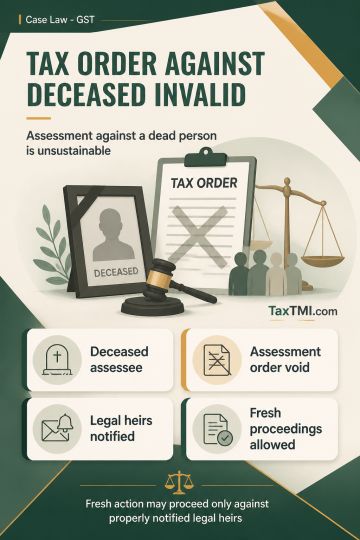
Mutual fund maturity rules require proper rollover, redemption, disclosure, and due diligence; investor gains cannot excuse regulatory breaches or pen...
Threshold exemption excludes exempt services, while stamp-paper purchases avoid reverse charge; consequential service tax penalties were also set asid...
Employee conflict disclosures and investment restrictions expand with new recusal duties, post-employment limits, and compliance reporting requirement...
The ITAT allowed the appeal of the assessee-trust, holding that the addition of Rs. 44,00,000/- made under s. 143(1) was unsustainable. The CPC had accepted all deductions claimed under ss. 11 and 10(23C), but committed an arithmetical error by incorrectly totaling the deductions at Rs. 7,52,41,564/- instead of Rs. 7,96,41,565/-. This miscalculation led to an erroneous computation of income purportedly chargeable under s. 11(1B), though the figure of Rs. 44,00,000/- was consistently reflected by both the assessee and CPC. ITAT held that the variation stemmed solely from CPC's totaling mistake, not from any disallowance or difference in claim, and therefore directed deletion of the entire addition.
The ITAT allowed the appeal of the assessee-trust, holding that the addition of Rs. 44,00,000/- made under s. 143(1) was unsustainable. The CPC had accepted all deductions claimed under ss. 11 and 10(23C), but committed an arithmetical error by incorrectly totaling the deductions at Rs. 7,52,41,564/- instead of Rs. 7,96,41,565/-. This miscalculation led to an erroneous computation of income purportedly chargeable under s. 11(1B), though the figure of Rs. 44,00,000/- was consistently reflected by both the assessee and CPC. ITAT held that the variation stemmed solely from CPC's totaling mistake, not from any disallowance or difference in claim, and therefore directed deletion of the entire addition.
Note: It is a system-generated summary and is for quick reference only.
 TaxTMI
 of 4805














 Join Channel


 TaxTMI