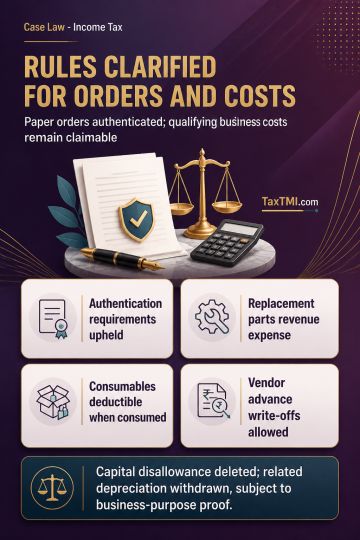
Authentication of paper assessment orders upheld, while qualifying repairs, consumables and vendor advance write-offs remain deductible business claim...
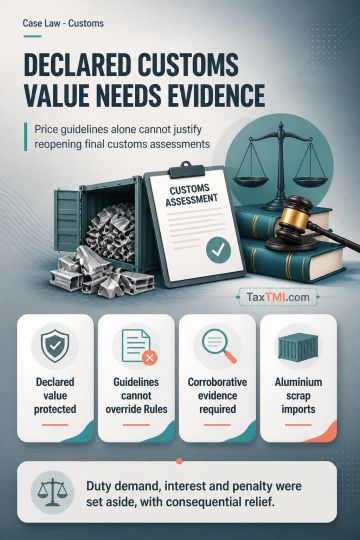
Transaction value cannot be rejected solely on non-statutory valuation guidelines without corroborative evidence supporting reassessment of final cust...
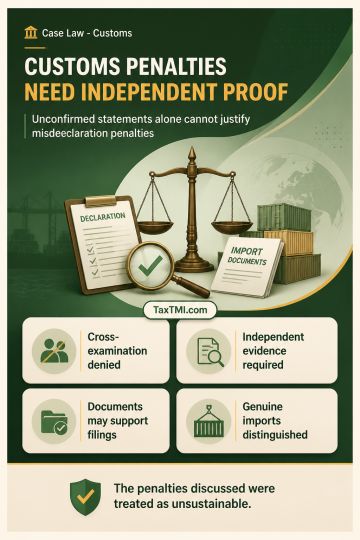
Cross-examination rights and corroborated evidence limit customs penalties for misdeclaration in genuine import transactions involving documented clea...
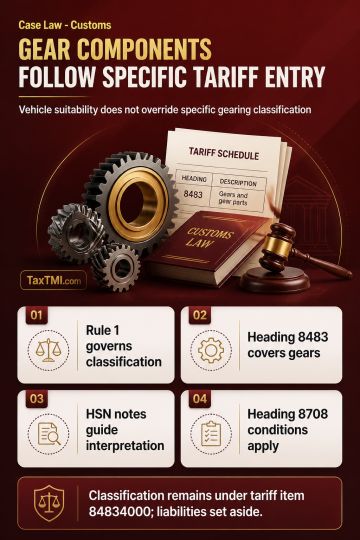
Tariff classification of vehicle gear components follows the specific gearing entry, displacing motor-vehicle parts classification and related liabili...
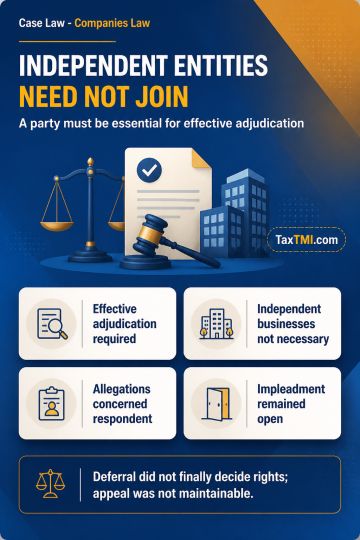
Necessary-party requirements limit impleadment of independent entities, while deferred consideration does not create an appealable adverse determinati...
HC held that orders obtained through fraud in the company's liquidation proceedings are nullities and liable to be set aside notwithstanding the lapse of over 30 years, as fraud vitiates limitation and all judicial acts. The appointment and continued control of the Special Officer, who had undisclosed conflicting interests and surreptitiously became the largest creditor and shareholder, was found to be an abuse of process. HC concluded that, given the company's concealed assets, absence of claims from creditors or employees, and the principle that winding up is a last resort, the company should not continue in liquidation and its remaining/traced assets must enure to its benefit. All applications seeking to sustain the fraudulent arrangement, including the prayer to transfer the matter to NCLT, were rejected, and the proceedings were disposed of accordingly.
HC held that orders obtained through fraud in the company's liquidation proceedings are nullities and liable to be set aside notwithstanding the lapse of over 30 years, as fraud vitiates limitation and all judicial acts. The appointment and continued control of the Special Officer, who had undisclosed conflicting interests and surreptitiously became the largest creditor and shareholder, was found to be an abuse of process. HC concluded that, given the company's concealed assets, absence of claims from creditors or employees, and the principle that winding up is a last resort, the company should not continue in liquidation and its remaining/traced assets must enure to its benefit. All applications seeking to sustain the fraudulent arrangement, including the prayer to transfer the matter to NCLT, were rejected, and the proceedings were disposed of accordingly.
Note: It is a system-generated summary and is for quick reference only.
 TaxTMI
 of 4803










 Join Channel


 TaxTMI
