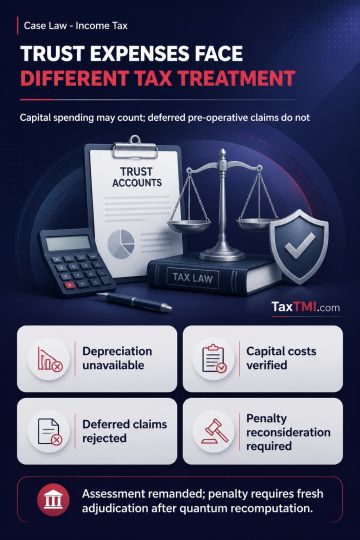
Charitable trust income application permits verified capital expenditure but rejects deferred pre-operative claims and requires reconsideration of con...
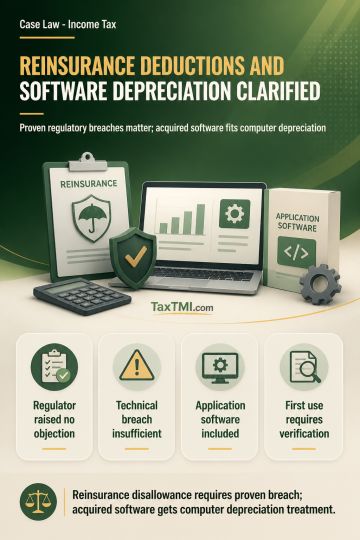
Reinsurance premium deductions require established regulatory breaches, while independently acquired software qualifies within the computer depreciati...
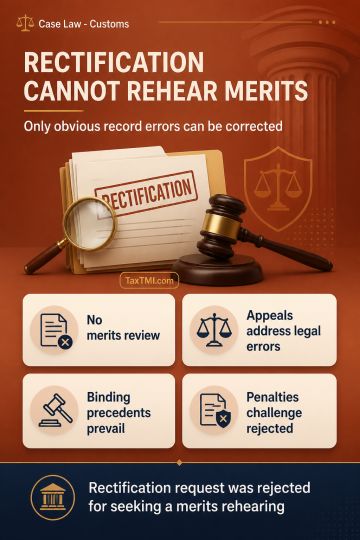
Rectification of mistake remains limited to self-evident record errors, preventing merits review through miscellaneous applications and preserving fin...
Tender creditworthiness conditions may extend to de facto Promoter Directors, with post-participation challenges generally barred absent arbitrariness...
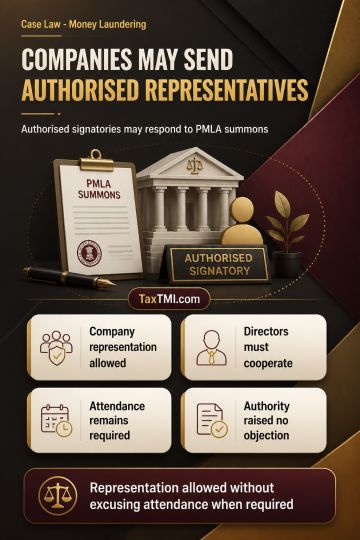
Corporate representation in PMLA summons proceedings permitted through an authorised signatory, subject to directors' continuing cooperation and atten...
NCLAT dismissed the appeal filed by the appellants challenging the NCLT's order directing investigation under s.213 of the Companies Act, 2013 into the affairs of Appellant No.1. Relying on established principles that such investigation cannot be ordered on bare allegations and requires subjective satisfaction based on material indicating public interest prejudice or detriment to members, NCLAT held that the NCLT had correctly applied the law. The Tribunal noted multiple observer reports by a former High Court judge alleging fraudulent transactions, siphoning of funds, and data gaps, and found no prima facie bias. NCLAT held that conclusive proof is not required at this stage, only good reasons and a prima facie case, both of which were adequately recorded in the impugned order.
NCLAT dismissed the appeal filed by the appellants challenging the NCLT's order directing investigation under s.213 of the Companies Act, 2013 into the affairs of Appellant No.1. Relying on established principles that such investigation cannot be ordered on bare allegations and requires subjective satisfaction based on material indicating public interest prejudice or detriment to members, NCLAT held that the NCLT had correctly applied the law. The Tribunal noted multiple observer reports by a former High Court judge alleging fraudulent transactions, siphoning of funds, and data gaps, and found no prima facie bias. NCLAT held that conclusive proof is not required at this stage, only good reasons and a prima facie case, both of which were adequately recorded in the impugned order.
Note: It is a system-generated summary and is for quick reference only.
 TaxTMI
 of 4805













 Join Channel


 TaxTMI
