Defined public benefit can retain charitable character; registration renewal requires examining genuine activities and legal compliance, not surplus a...
Capital reduction is distinct from share buy-back, preventing buy-back tax; restructuring interest and related business deductions also survive scruti...
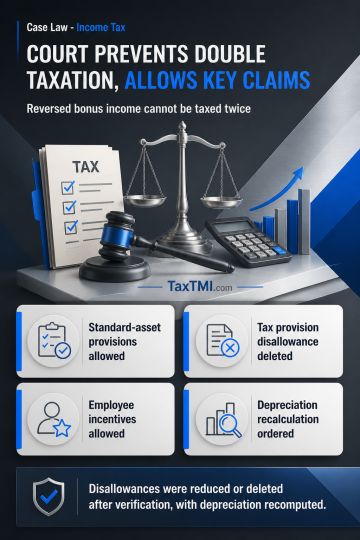
Transfer pricing and tax deductions upheld on established principles, while employee contributions and warranty provisions returned for fresh examinat...
Captive transfer pricing relies on industrial consumer tariffs, while genuine quotations can benchmark effluent treatment transfers under the Other Me...
Specific tariff classification for ophthalmic instruments and extended limitation principles determine the treatment of duty demands, confiscation, an...
NCLAT dismissed the appeal and affirmed the NCLT's order approving the resolution plan for the corporate debtor. It held that, although the appellant's expenditure on the corporate debtor had been acknowledged in prior proceedings, the appellant failed to substantiate its claim as financial or operational debt under the IBC, particularly given the delayed filing, absence of supporting documents, and an exorbitant, contractually unsupported interest component. NCLAT found no contravention of s.30(2)(b) IBC or the CIRP Regulations and reiterated the primacy of the CoC's commercial wisdom, especially where the plan had been approved with 100% voting share. As the resolution plan complied with all mandatory statutory requirements and no material irregularity was established, judicial interference was held to be unwarranted. The successful resolution applicant was permitted to proceed in terms of the approved plan, and the appeal was disposed of.
NCLAT dismissed the appeal and affirmed the NCLT's order approving the resolution plan for the corporate debtor. It held that, although the appellant's expenditure on the corporate debtor had been acknowledged in prior proceedings, the appellant failed to substantiate its claim as financial or operational debt under the IBC, particularly given the delayed filing, absence of supporting documents, and an exorbitant, contractually unsupported interest component. NCLAT found no contravention of s.30(2)(b) IBC or the CIRP Regulations and reiterated the primacy of the CoC's commercial wisdom, especially where the plan had been approved with 100% voting share. As the resolution plan complied with all mandatory statutory requirements and no material irregularity was established, judicial interference was held to be unwarranted. The successful resolution applicant was permitted to proceed in terms of the approved plan, and the appeal was disposed of.
Note: It is a system-generated summary and is for quick reference only.
 TaxTMI
 of 4805



















 Join Channel


 TaxTMI

