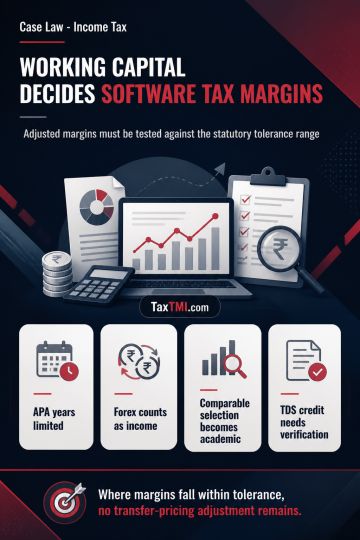
Working-capital adjustment determines whether software-services transfer-pricing margins fall within the statutory tolerance range, eliminating any ad...
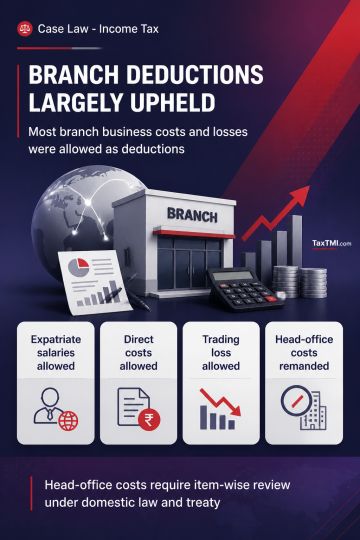
Permanent establishment deductions upheld for expatriate salaries, direct costs and trading losses, while head-office costs require fresh classificati...
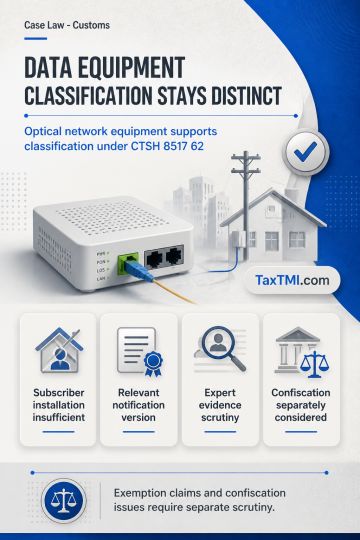
Data transmission equipment classification under CTSH 8517 62 remains distinct from residual classification, with exemption evidence requiring scrutin...
HC, exercising jurisdiction under Section 480(6) B.N.S.S., allowed the bail application of A v. State in an economic offence under Section 132(1)(b)(c)(f)(l) of the 2017 Act, a non-bailable offence triable by Magistrate. The petitioner had been in custody since 03.06.2024 and cognizance was taken on 01.02.2025, with only partial examination of three out of ten witnesses and no delay attributable to the accused. Noting the constitutional mandate of Article 21 and the procedural safeguard against undue trial delay, as well as the absence of recorded reasons by the trial court justifying continued incarceration, HC invoked Section 480(6) B.N.S.S. and directed that the petitioner be enlarged on bail, subject to usual conditions.
HC, exercising jurisdiction under Section 480(6) B.N.S.S., allowed the bail application of A v. State in an economic offence under Section 132(1)(b)(c)(f)(l) of the 2017 Act, a non-bailable offence triable by Magistrate. The petitioner had been in custody since 03.06.2024 and cognizance was taken on 01.02.2025, with only partial examination of three out of ten witnesses and no delay attributable to the accused. Noting the constitutional mandate of Article 21 and the procedural safeguard against undue trial delay, as well as the absence of recorded reasons by the trial court justifying continued incarceration, HC invoked Section 480(6) B.N.S.S. and directed that the petitioner be enlarged on bail, subject to usual conditions.
Note: It is a system-generated summary and is for quick reference only.
 TaxTMI
 of 4800








 Join Channel


 TaxTMI