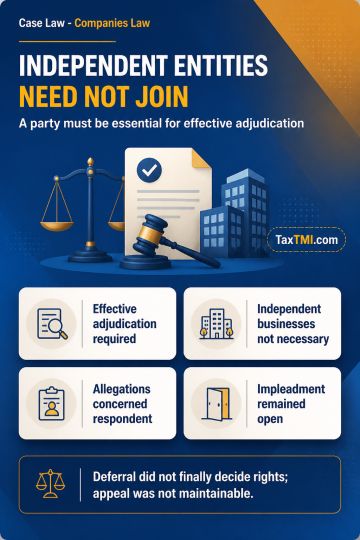
Necessary-party requirements limit impleadment of independent entities, while deferred consideration does not create an appealable adverse determinati...
Food supplement classification requires common parlance and authoritative tests, preventing treatment as proprietary Ayurvedic medicines without suppo...
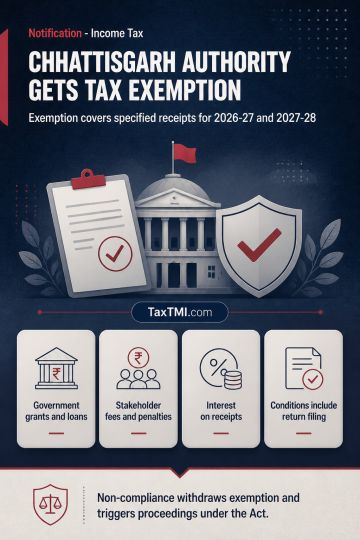
Specified regulatory authority income receives conditional tax exemption, subject to non-commercial activity, unchanged income character, and return f...
Tax exemption for regulatory authority income applies retrospectively, subject to non-commercial activity, unchanged income sources, and return-filing...
Input tax credit conditions remain constitutionally valid, with eligible recipient claims considered under GST circulars and retrospective filing dead...
NCLAT dismissed the appeal filed by the alleged creditor, holding that he failed to establish any valid, verifiable financial disbursement to qualify as a financial creditor under Section 5(8)(f) IBC. The claimed payments by cheque and cash were unsupported by bank records, receipts, or other documentary evidence, and the burden of proof lay on the appellant. The RP had lawfully rejected the claim, and the mention of "0% claim admitted" did not amount to its admission. NCLAT further noted indicia of collusion with the erstwhile management and unauthorized occupation of a flat without consideration. As the resolution plan had been approved by NCLT and the statutory period under Section 61(2) IBC had expired, the appellant's belated attempt to reopen or revive his claim was held impermissible. The impugned order was affirmed and the appeal was rejected.
NCLAT dismissed the appeal filed by the alleged creditor, holding that he failed to establish any valid, verifiable financial disbursement to qualify as a financial creditor under Section 5(8)(f) IBC. The claimed payments by cheque and cash were unsupported by bank records, receipts, or other documentary evidence, and the burden of proof lay on the appellant. The RP had lawfully rejected the claim, and the mention of "0% claim admitted" did not amount to its admission. NCLAT further noted indicia of collusion with the erstwhile management and unauthorized occupation of a flat without consideration. As the resolution plan had been approved by NCLT and the statutory period under Section 61(2) IBC had expired, the appellant's belated attempt to reopen or revive his claim was held impermissible. The impugned order was affirmed and the appeal was rejected.
Note: It is a system-generated summary and is for quick reference only.
 TaxTMI
 of 4792















 Join Channel


 TaxTMI

