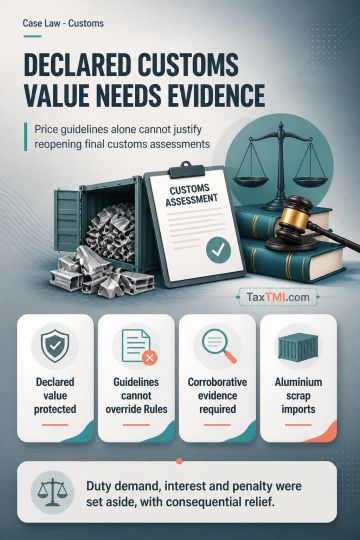
Transaction value cannot be rejected solely on non-statutory valuation guidelines without corroborative evidence supporting reassessment of final cust...
Cross-examination rights and corroborated evidence limit customs penalties for misdeclaration in genuine import transactions involving documented clea...
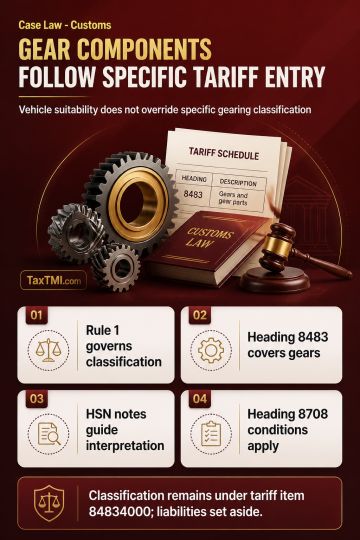
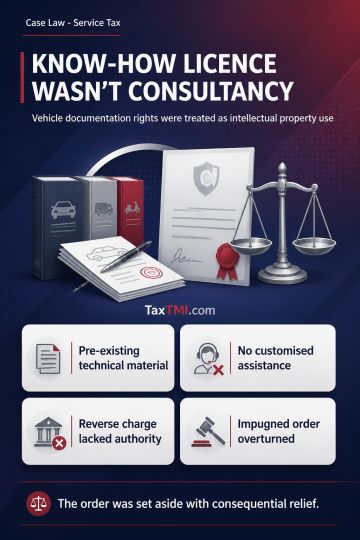
Tariff classification of vehicle gear components follows the specific gearing entry, displacing motor-vehicle parts classification and related liabili...
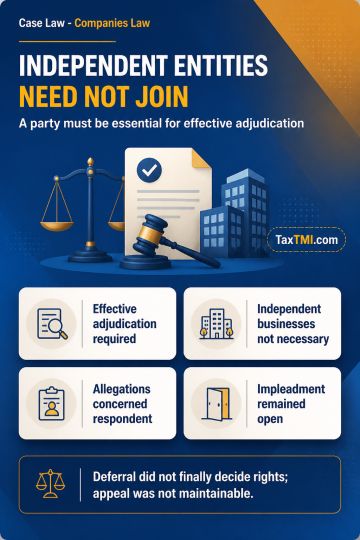
Necessary-party requirements limit impleadment of independent entities, while deferred consideration does not create an appealable adverse determinati...
Food supplement classification requires common parlance and authoritative tests, preventing treatment as proprietary Ayurvedic medicines without suppo...
The HC held that seizure of goods was unlawful where a valid e-way bill accompanied the consignment and remained uncancelled, demonstrating genuineness of transport documents and negating any demonstrable intent to evade tax. The absence of the shipping address as an additional place of business and omission of a consignor's official signature on the delivery challan did not, without more, establish culpable noncompliance justifying seizure. The court found that, given the valid e-way bill and accompanying documentation, departmental action amounted to unnecessary litigation and breached statutory safeguards; prior analogous authority supported quashing of such proceedings. The impugned orders were quashed and the petition allowed.
The HC held that seizure of goods was unlawful where a valid e-way bill accompanied the consignment and remained uncancelled, demonstrating genuineness of transport documents and negating any demonstrable intent to evade tax. The absence of the shipping address as an additional place of business and omission of a consignor's official signature on the delivery challan did not, without more, establish culpable noncompliance justifying seizure. The court found that, given the valid e-way bill and accompanying documentation, departmental action amounted to unnecessary litigation and breached statutory safeguards; prior analogous authority supported quashing of such proceedings. The impugned orders were quashed and the petition allowed.
Note: It is a system-generated summary and is for quick reference only.
 TaxTMI
 of 4801






 Join Channel


 TaxTMI
