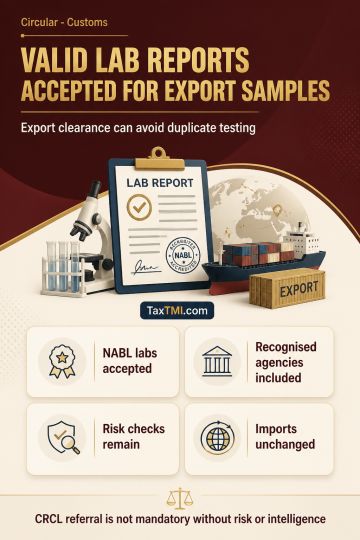
Derivative abetment liability fails when correctly declared imported components establish no underlying improper importation by the principal importer...
Tax exemption for regulatory authority income applies retrospectively, subject to non-commercial activity, unchanged income sources, and return filing...
HC allowed the applicant's bail application and ordered release on furnishing appropriate surety. The applicant, accused of embezzling funds exceeding Rs.120 crores through fictitious suppliers to facilitate illegal sales and GST evasion, was held to face a prosecution principally reliant on documentary and electronic evidence, with investigation completed and trial likely to be protracted. Although the offence under s.132(1)(i) C.G.S.T. Act is cognizable and non-bailable, it carries a maximum sentence of five years and is triable by a Magistrate. The applicant has no antecedent criminal record and there is no demonstrable risk of tampering with documentary proof; accordingly, applying settled principles governing custodial bail, release on bail was directed.
HC allowed the applicant's bail application and ordered release on furnishing appropriate surety. The applicant, accused of embezzling funds exceeding Rs.120 crores through fictitious suppliers to facilitate illegal sales and GST evasion, was held to face a prosecution principally reliant on documentary and electronic evidence, with investigation completed and trial likely to be protracted. Although the offence under s.132(1)(i) C.G.S.T. Act is cognizable and non-bailable, it carries a maximum sentence of five years and is triable by a Magistrate. The applicant has no antecedent criminal record and there is no demonstrable risk of tampering with documentary proof; accordingly, applying settled principles governing custodial bail, release on bail was directed.
Note: It is a system-generated summary and is for quick reference only.
 TaxTMI
 of 4801


















 Join Channel


 TaxTMI
