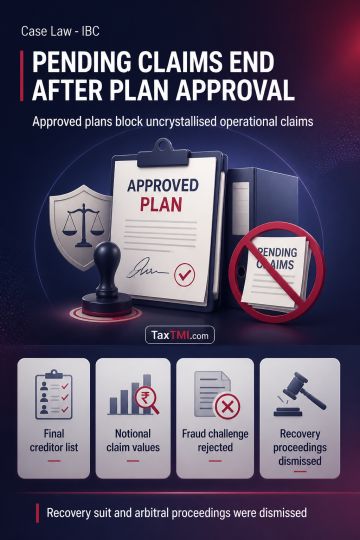
Clean slate principle extinguishes uncrystallised operational claims and bars continuation of pending recovery and arbitral proceedings after plan app...
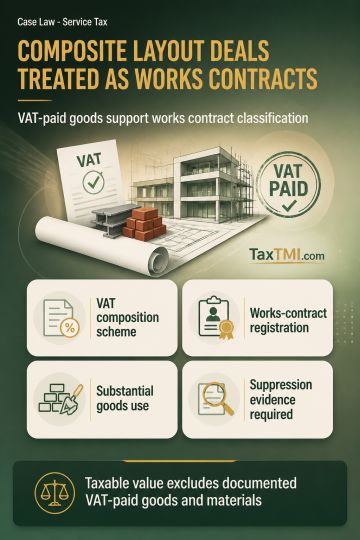
Works contract classification governs composite layout-development contracts where VAT-paid goods are transferred alongside construction and infrastru...
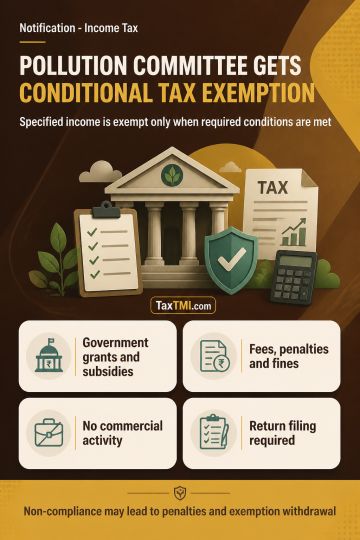
Specified income tax exemption for pollution control body remains conditional on non-commercial activity, unchanged income character, and return filin...
ITAT dismissed the revenue's appeal and upheld the CIT(A)'s allowance of the assessee's claim under section 14A read with r.w.r. 8D. The Tribunal found the AO's suo-moto disallowance unreasonable and procedurally defective because no contemporaneous satisfaction was recorded to justify overriding the assessee's self-disallowance, and the AO failed to segregate investments yielding exempt income. The AO's computation, which exceeded total P&L expenses and ignored the assessee's working confined to investments producing exempt income, was held to lack logical basis and factual appreciation. Consequently, the excess disallowance imposed by the AO was deleted and the revenue's appeal dismissed.
ITAT dismissed the revenue's appeal and upheld the CIT(A)'s allowance of the assessee's claim under section 14A read with r.w.r. 8D. The Tribunal found the AO's suo-moto disallowance unreasonable and procedurally defective because no contemporaneous satisfaction was recorded to justify overriding the assessee's self-disallowance, and the AO failed to segregate investments yielding exempt income. The AO's computation, which exceeded total P&L expenses and ignored the assessee's working confined to investments producing exempt income, was held to lack logical basis and factual appreciation. Consequently, the excess disallowance imposed by the AO was deleted and the revenue's appeal dismissed.
Note: It is a system-generated summary and is for quick reference only.
 TaxTMI
 of 4801













 Join Channel


 TaxTMI