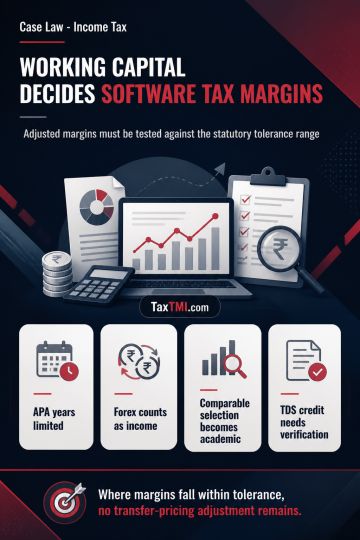
Working-capital adjustment determines whether software-services transfer-pricing margins fall within the statutory tolerance range, eliminating any ad...
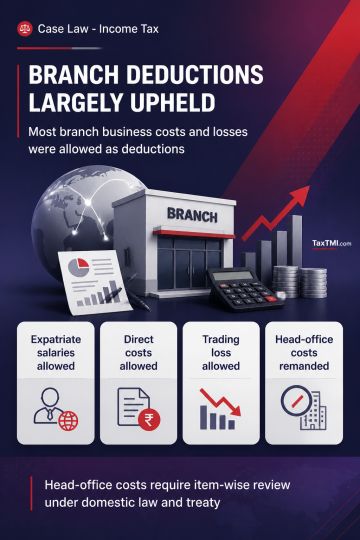
Permanent establishment deductions upheld for expatriate salaries, direct costs and trading losses, while head-office costs require fresh classificati...
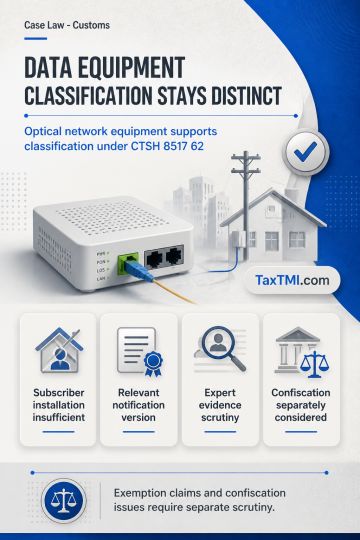
Data transmission equipment classification under CTSH 8517 62 remains distinct from residual classification, with exemption evidence requiring scrutin...
ITAT dismissed the revenue's appeal and upheld the CIT(A)'s allowance of the assessee's claim under section 14A read with r.w.r. 8D. The Tribunal found the AO's suo-moto disallowance unreasonable and procedurally defective because no contemporaneous satisfaction was recorded to justify overriding the assessee's self-disallowance, and the AO failed to segregate investments yielding exempt income. The AO's computation, which exceeded total P&L expenses and ignored the assessee's working confined to investments producing exempt income, was held to lack logical basis and factual appreciation. Consequently, the excess disallowance imposed by the AO was deleted and the revenue's appeal dismissed.
ITAT dismissed the revenue's appeal and upheld the CIT(A)'s allowance of the assessee's claim under section 14A read with r.w.r. 8D. The Tribunal found the AO's suo-moto disallowance unreasonable and procedurally defective because no contemporaneous satisfaction was recorded to justify overriding the assessee's self-disallowance, and the AO failed to segregate investments yielding exempt income. The AO's computation, which exceeded total P&L expenses and ignored the assessee's working confined to investments producing exempt income, was held to lack logical basis and factual appreciation. Consequently, the excess disallowance imposed by the AO was deleted and the revenue's appeal dismissed.
Note: It is a system-generated summary and is for quick reference only.
 TaxTMI
 of 4800







 Join Channel


 TaxTMI