Receipt of immovable property requires actual possession or enjoyment; redevelopment allotments exchanged for tenancy rights fall outside deemed incom...
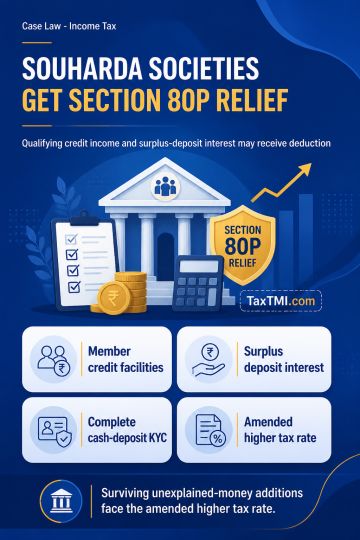
Section 80P deduction covers Souharda credit societies, including qualifying surplus-deposit interest, subject to member KYC verification for cash dep...
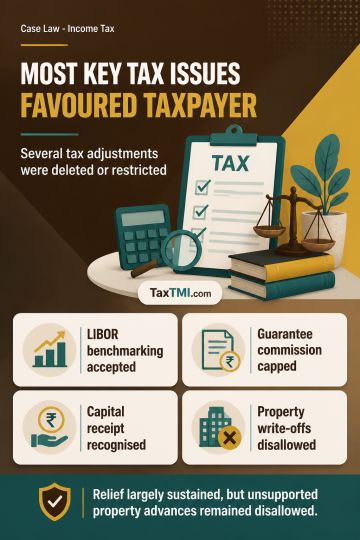
Transfer-pricing benchmarking and capital-receipt principles sustained taxpayer relief, while unsupported property-advance write-offs remained disallo...
ITAT dismissed the revenue's appeal and upheld the CIT(A)'s allowance of the assessee's claim under section 14A read with r.w.r. 8D. The Tribunal found the AO's suo-moto disallowance unreasonable and procedurally defective because no contemporaneous satisfaction was recorded to justify overriding the assessee's self-disallowance, and the AO failed to segregate investments yielding exempt income. The AO's computation, which exceeded total P&L expenses and ignored the assessee's working confined to investments producing exempt income, was held to lack logical basis and factual appreciation. Consequently, the excess disallowance imposed by the AO was deleted and the revenue's appeal dismissed.
ITAT dismissed the revenue's appeal and upheld the CIT(A)'s allowance of the assessee's claim under section 14A read with r.w.r. 8D. The Tribunal found the AO's suo-moto disallowance unreasonable and procedurally defective because no contemporaneous satisfaction was recorded to justify overriding the assessee's self-disallowance, and the AO failed to segregate investments yielding exempt income. The AO's computation, which exceeded total P&L expenses and ignored the assessee's working confined to investments producing exempt income, was held to lack logical basis and factual appreciation. Consequently, the excess disallowance imposed by the AO was deleted and the revenue's appeal dismissed.
Note: It is a system-generated summary and is for quick reference only.
 TaxTMI
 of 4800

















 Join Channel


 TaxTMI
