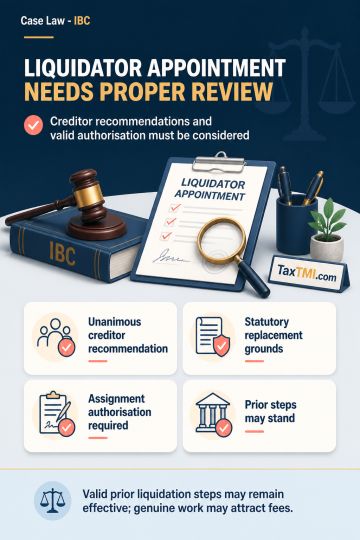
Liquidator appointment under Section 34 requires consideration of creditor recommendations, valid professional authorisation, and preservation of vali...
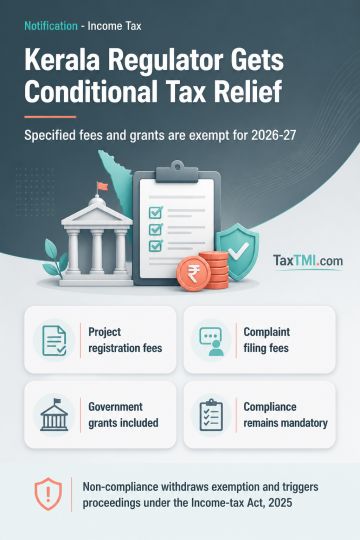
Income-tax exemption for specified regulatory fees and government grants applies subject to non-commercial activity and continuing compliance conditio...
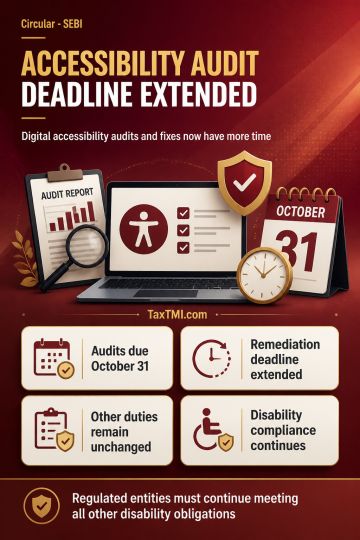
Digital accessibility audit and remediation deadlines extended, while all other disability-compliance obligations for regulated entities remain unchan...
ITAT dismissed the revenue's appeal and upheld the CIT(A)'s allowance of the assessee's claim under section 14A read with r.w.r. 8D. The Tribunal found the AO's suo-moto disallowance unreasonable and procedurally defective because no contemporaneous satisfaction was recorded to justify overriding the assessee's self-disallowance, and the AO failed to segregate investments yielding exempt income. The AO's computation, which exceeded total P&L expenses and ignored the assessee's working confined to investments producing exempt income, was held to lack logical basis and factual appreciation. Consequently, the excess disallowance imposed by the AO was deleted and the revenue's appeal dismissed.
ITAT dismissed the revenue's appeal and upheld the CIT(A)'s allowance of the assessee's claim under section 14A read with r.w.r. 8D. The Tribunal found the AO's suo-moto disallowance unreasonable and procedurally defective because no contemporaneous satisfaction was recorded to justify overriding the assessee's self-disallowance, and the AO failed to segregate investments yielding exempt income. The AO's computation, which exceeded total P&L expenses and ignored the assessee's working confined to investments producing exempt income, was held to lack logical basis and factual appreciation. Consequently, the excess disallowance imposed by the AO was deleted and the revenue's appeal dismissed.
Note: It is a system-generated summary and is for quick reference only.
 TaxTMI
 of 4794



 Join Channel


 TaxTMI