Specified regulatory authority income receives conditional tax exemption, subject to non-commercial activity, unchanged income character, and return f...
Tax exemption for regulatory authority income applies retrospectively, subject to non-commercial activity, unchanged income sources, and return-filing...
Input tax credit conditions remain constitutionally valid, with eligible recipient claims considered under GST circulars and retrospective filing dead...
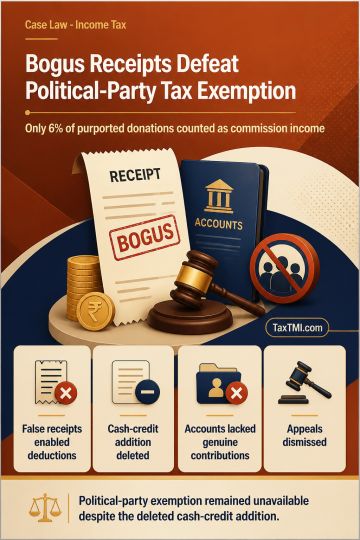
Bogus donation receipts justified commission income assessment and defeated political-party tax exemption for inaccurate accounts and reporting failur...
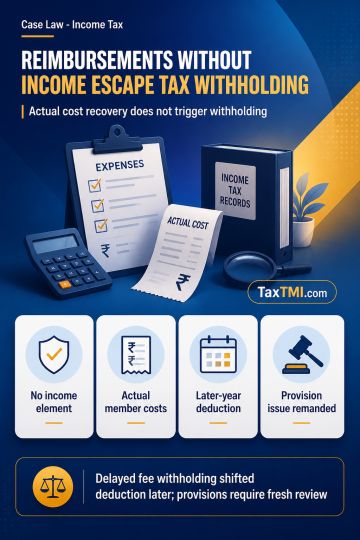
Pure reimbursement without income element escapes tax withholding, while delayed withholding and unsupported provisions face deferred or renewed scrut...
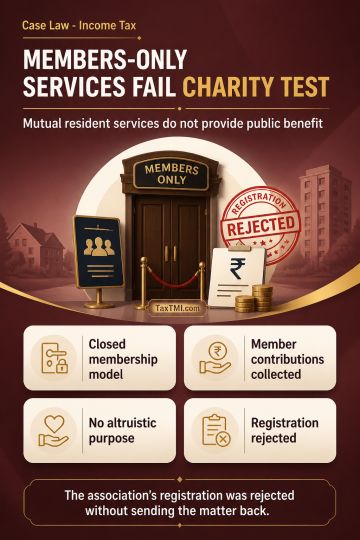
Public benefit requirement defeats charitable registration where residents' association services are reciprocal, member-only facilities governed by mu...
ITAT holds that, applying the ICAI Guidance Note on Real Estate Accounting (Revised 2012), land and development rights qualify as direct project costs but must be excluded when determining the 25% construction-and-development-cost threshold to trigger revenue recognition under the Percentage of Completion Method (POCM); once that threshold is met using construction and development costs, total project costs (including land) determine stage of completion and revenue to be recognized. The taxpayer's POCM application was correct: Phase-1 exceeded the 25% threshold whereas Phase-2A did not (19.5205%), and unreconciled revenue was recognized in subsequent years at unchanged tax rates. Absent evidence of deliberate evasion or inconsistent accounting, ITAT found the AO and lower authority's additions unjustified, directed vacatur of those additions and allowed the taxpayer's appeal.
ITAT holds that, applying the ICAI Guidance Note on Real Estate Accounting (Revised 2012), land and development rights qualify as direct project costs but must be excluded when determining the 25% construction-and-development-cost threshold to trigger revenue recognition under the Percentage of Completion Method (POCM); once that threshold is met using construction and development costs, total project costs (including land) determine stage of completion and revenue to be recognized. The taxpayer's POCM application was correct: Phase-1 exceeded the 25% threshold whereas Phase-2A did not (19.5205%), and unreconciled revenue was recognized in subsequent years at unchanged tax rates. Absent evidence of deliberate evasion or inconsistent accounting, ITAT found the AO and lower authority's additions unjustified, directed vacatur of those additions and allowed the taxpayer's appeal.
Note: It is a system-generated summary and is for quick reference only.
 TaxTMI
 of 4800











 Join Channel


 TaxTMI