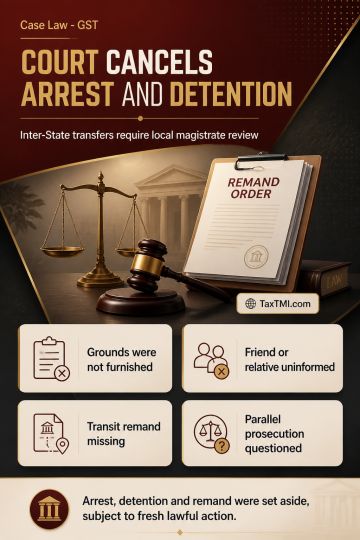
Arrest safeguards and transit remand requirements invalidated detention following inter-State transfer without communicated grounds or magistrate auth...
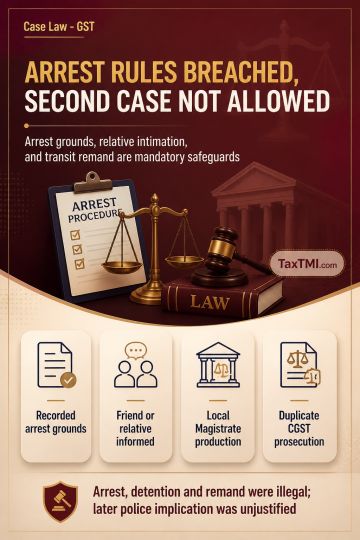
Arrest safeguards require disclosed grounds, relative intimation and transit remand, while duplicate prosecution under the CGST framework is unsustain...
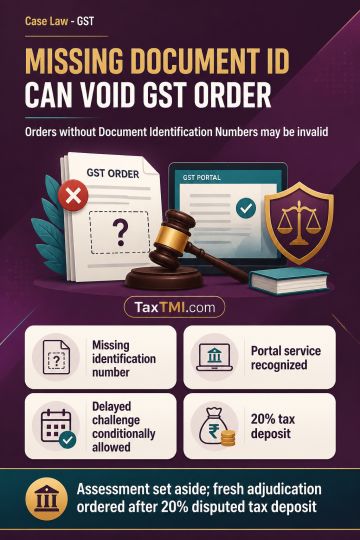
Document Identification Number defects can invalidate GST assessments, with delayed challenges entertained conditionally where patent irregularities e...
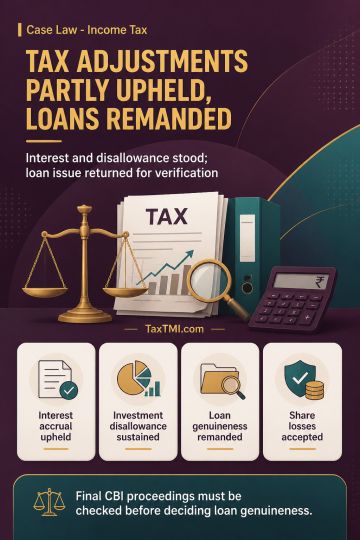
Windmill commissioning evidence supported higher depreciation where grid connection and electricity generation proved operational use before the relev...
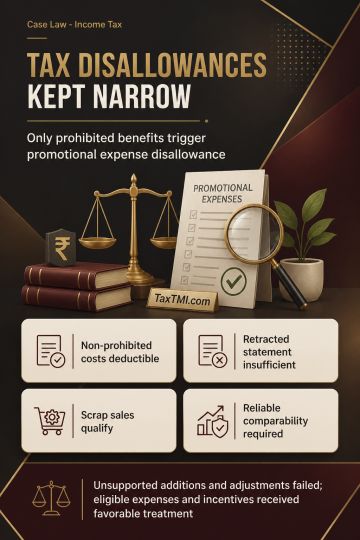
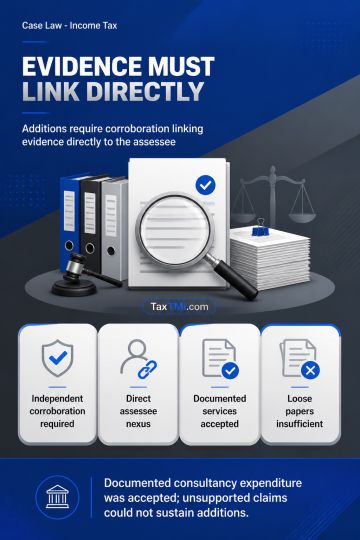
Pharmaceutical promotion and transfer-pricing comparability principles limited disallowances, while uncorroborated search allegations and unsupported ...
Business expenditure substantiation supports scrap credits, statutory payments and expense claims, while depreciation requires proof of actual busines...
Page of 4798
Press 'Enter' after typing page number.
701 to 720 of 95955 Results
❮
❯
❯❯
0 / 200
Expand Note
Add to Folder
No Folders have been created
+
Are you sure you want to delete "My most important" ?
The CESTAT held that the contract manufacturers (CMs) were not...
Beneficial owner held liable for differential customs duty; royalties added under Rule 10(1)(c); confiscation, penalties under s.111(m), s.114A, s.112(a), s.114AA
Contents
Summary
Note
Bookmark
Share
✓ Copied successfully !
Print
Print Options
For full text, please login
Login to TaxTMI
Verification Pending
The Email Id has not been verified. Click on the link we have sent on
The CESTAT held that the contract manufacturers (CMs) were not the buyers of the imported parts and components; X Corp was the beneficial owner and therefore chargeable with differential customs duty. Royalties/license fees were held addable to transaction value under Rule 10(1)(c) and demand for duty could be made from the beneficial owner; extended limitation was invoked for willful suppression. Interest on delayed payment was confirmed. The goods were liable to confiscation under s.111(m). Penalty under s.114A was sustained against X Corp (precluding a concurrent s.112 levy); CMs were liable under s.112(a) and s.114AA. No penalties were imposed on the named executive. Differential duty with interest was confirmed and the matter was remanded to the OA to redetermine penalties. Appeal disposed.
The CESTAT held that the contract manufacturers (CMs) were not the buyers of the imported parts and components; X Corp was the beneficial owner and therefore chargeable with differential customs duty. Royalties/license fees were held addable to transaction value under Rule 10(1)(c) and demand for duty could be made from the beneficial owner; extended limitation was invoked for willful suppression. Interest on delayed payment was confirmed. The goods were liable to confiscation under s.111(m). Penalty under s.114A was sustained against X Corp (precluding a concurrent s.112 levy); CMs were liable under s.112(a) and s.114AA. No penalties were imposed on the named executive. Differential duty with interest was confirmed and the matter was remanded to the OA to redetermine penalties. Appeal disposed.
Note: It is a system-generated summary and is for quick reference only.
 TaxTMI
 of 4798







 Join Channel


 TaxTMI