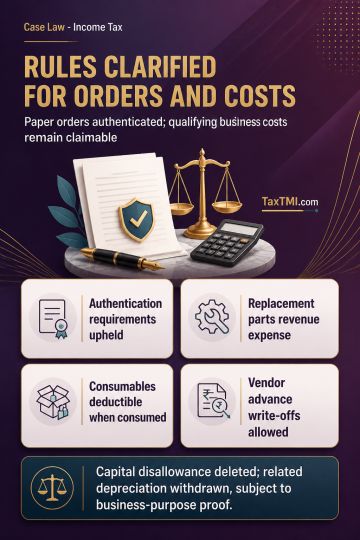
Authentication of paper assessment orders upheld, while qualifying repairs, consumables and vendor advance write-offs remain deductible business claim...
Transaction value cannot be rejected solely on non-statutory valuation guidelines without corroborative evidence supporting reassessment of final cust...
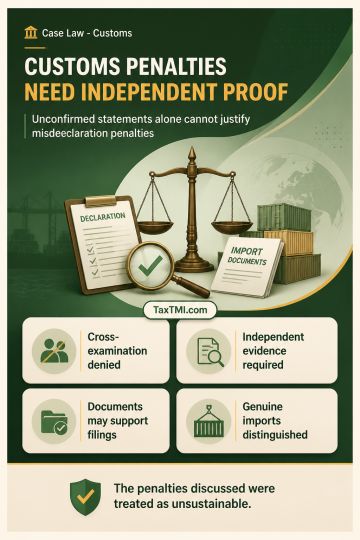
Cross-examination rights and corroborated evidence limit customs penalties for misdeclaration in genuine import transactions involving documented clea...
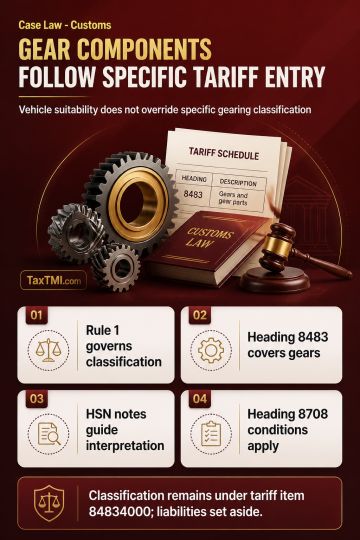
Tariff classification of vehicle gear components follows the specific gearing entry, displacing motor-vehicle parts classification and related liabili...
The AT affirms the provisional attachment order and dismisses the appeals, holding that the co-lending/service agreements between the NBFC and fintech entities effectively outsourced core management functions, facilitated misuse of borrower data and constituted prima facie commission of offences under sections 417, 419, 420 IPC and sections 66-C, 66-D IT Act. The tribunal finds the fintech entities, by providing funds as a purported "performance guarantee" and receiving guaranteed revenue or service fees, assumed substantive loan-related functions without due diligence, while the NBFC obtained assured returns without capital exposure. The appellants' contention of limited fintech involvement is rejected as the agreements demonstrate delegation of non-permissible core activities.
The AT affirms the provisional attachment order and dismisses the appeals, holding that the co-lending/service agreements between the NBFC and fintech entities effectively outsourced core management functions, facilitated misuse of borrower data and constituted prima facie commission of offences under sections 417, 419, 420 IPC and sections 66-C, 66-D IT Act. The tribunal finds the fintech entities, by providing funds as a purported "performance guarantee" and receiving guaranteed revenue or service fees, assumed substantive loan-related functions without due diligence, while the NBFC obtained assured returns without capital exposure. The appellants' contention of limited fintech involvement is rejected as the agreements demonstrate delegation of non-permissible core activities.
Note: It is a system-generated summary and is for quick reference only.
 TaxTMI
 of 4792
















 Join Channel


 TaxTMI