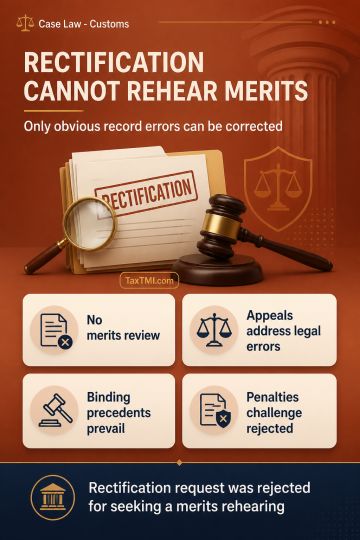
Rectification of mistake remains limited to self-evident record errors, preventing merits review through miscellaneous applications and preserving fin...
Tender creditworthiness conditions may extend to de facto Promoter Directors, with post-participation challenges generally barred absent arbitrariness...
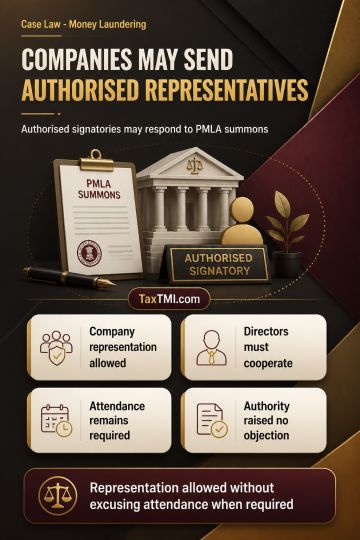
Corporate representation in PMLA summons proceedings permitted through an authorised signatory, subject to directors' continuing cooperation and atten...
Helicopter charter classification requires effective control analysis, while territorial performance, reasoned credit orders and wilful suppression de...
Page of 4796
Press 'Enter' after typing page number.
781 to 800 of 95918 Results
❮
❯
❯❯
0 / 200
Expand Note
Add to Folder
No Folders have been created
+
Are you sure you want to delete "My most important" ?
The AT allowed the appeal and set aside the impugned order, finding that the Respondent unlawfully retained seized property/documents beyond the initial 180-day period under s.8(3)(a) and failed to furnish relied-upon documents (including FIR copies, ITRs and GSTRs) to the Appellant, thereby breaching procedural fairness; disclosure of the ECIR was correctly deemed unnecessary. The Directorate lacked mandate to continue retention absent proper compliance. If a prosecution complaint has since been filed and the seized property is proposed for confiscation, its release is now governed by the order of the Special Court, and the Appellant remains at liberty to pursue available remedies before that court.
The AT allowed the appeal and set aside the impugned order, finding that the Respondent unlawfully retained seized property/documents beyond the initial 180-day period under s.8(3)(a) and failed to furnish relied-upon documents (including FIR copies, ITRs and GSTRs) to the Appellant, thereby breaching procedural fairness; disclosure of the ECIR was correctly deemed unnecessary. The Directorate lacked mandate to continue retention absent proper compliance. If a prosecution complaint has since been filed and the seized property is proposed for confiscation, its release is now governed by the order of the Special Court, and the Appellant remains at liberty to pursue available remedies before that court.
Note: It is a system-generated summary and is for quick reference only.
 TaxTMI
 of 4796










 Join Channel


 TaxTMI