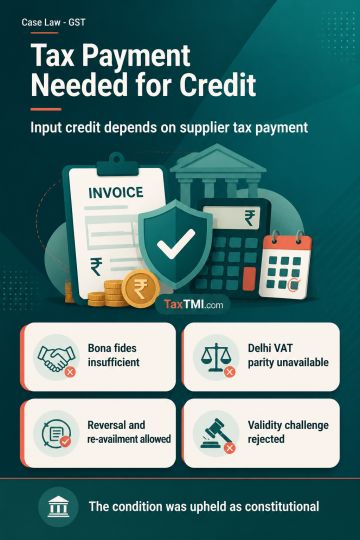
Input tax credit conditions remain constitutionally valid, with eligible recipient claims considered under GST circulars and retrospective filing dead...
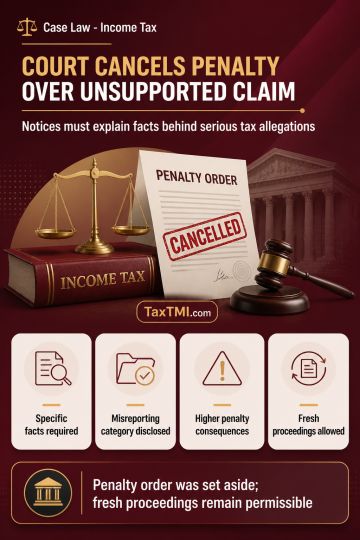
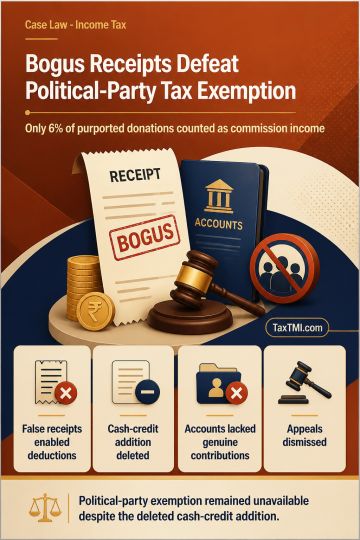
Bogus donation receipts justified commission income assessment and defeated political-party tax exemption for inaccurate accounts and reporting failur...
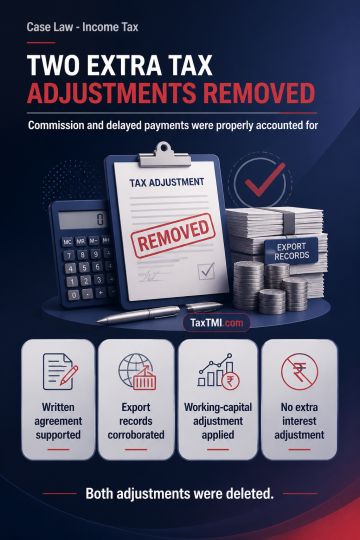
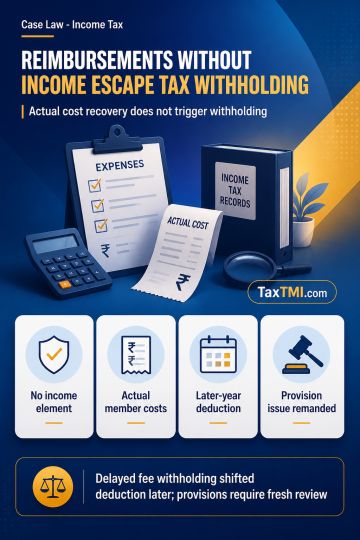
Pure reimbursement without income element escapes tax withholding, while delayed withholding and unsupported provisions face deferred or renewed scrut...
Public benefit requirement defeats charitable registration where residents' association services are reciprocal, member-only facilities governed by mu...
Exempt-income expenditure disallowance is confined to investments that actually generated exempt income, while supported business expenses remain dedu...
The AT allowed the appeal and set aside the impugned order, finding that the Respondent unlawfully retained seized property/documents beyond the initial 180-day period under s.8(3)(a) and failed to furnish relied-upon documents (including FIR copies, ITRs and GSTRs) to the Appellant, thereby breaching procedural fairness; disclosure of the ECIR was correctly deemed unnecessary. The Directorate lacked mandate to continue retention absent proper compliance. If a prosecution complaint has since been filed and the seized property is proposed for confiscation, its release is now governed by the order of the Special Court, and the Appellant remains at liberty to pursue available remedies before that court.
The AT allowed the appeal and set aside the impugned order, finding that the Respondent unlawfully retained seized property/documents beyond the initial 180-day period under s.8(3)(a) and failed to furnish relied-upon documents (including FIR copies, ITRs and GSTRs) to the Appellant, thereby breaching procedural fairness; disclosure of the ECIR was correctly deemed unnecessary. The Directorate lacked mandate to continue retention absent proper compliance. If a prosecution complaint has since been filed and the seized property is proposed for confiscation, its release is now governed by the order of the Special Court, and the Appellant remains at liberty to pursue available remedies before that court.
Note: It is a system-generated summary and is for quick reference only.
 TaxTMI
 of 4794










 Join Channel


 TaxTMI