Service of notice and contractual debt acknowledgment preserved insolvency admission against a corporate guarantor despite limitation and natural just...
Original works exemption excludes standalone boulder transportation, leaving subcontracted railway-project transport services subject to service tax l...
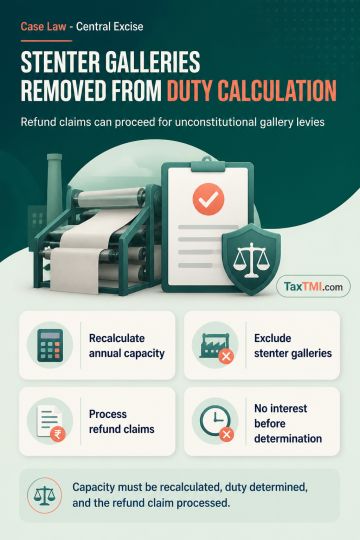
Annual production capacity determinations excluding stenter galleries support refunds for unconstitutional excise levies without an unjust-enrichment ...
Vicarious liability for cheque dishonour requires specific allegations of responsibility and cheque signatory; generic director allegations cannot sus...
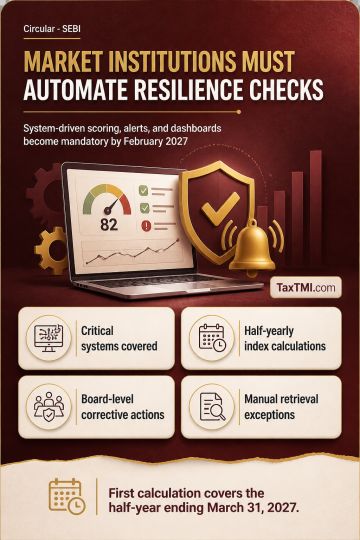
IT Resilience Index requires market infrastructure institutions to automate resilience scoring, early warnings, and continuous service-delivery monito...
CESTAT dismissed the appeal by the Revenue and upheld the impugned order, quashing confiscation and penalty relating to recovery of 80 bags of posta dana. The Tribunal held that the Department failed to discharge the burden of proof that the consignment was of foreign origin or smuggled: seizure relied solely on invoice verification and opinions of three local traders without specifying any third country, and no expert report or analysis from a notified laboratory was procured. As posta dana is not a commodity specified under s.123 of the Customs Act, the onus to establish illicit import lay squarely on the authorities. Documentary gaps, if any, should be addressed under domestic law, not by invoking the Customs Act.
CESTAT dismissed the appeal by the Revenue and upheld the impugned order, quashing confiscation and penalty relating to recovery of 80 bags of posta dana. The Tribunal held that the Department failed to discharge the burden of proof that the consignment was of foreign origin or smuggled: seizure relied solely on invoice verification and opinions of three local traders without specifying any third country, and no expert report or analysis from a notified laboratory was procured. As posta dana is not a commodity specified under s.123 of the Customs Act, the onus to establish illicit import lay squarely on the authorities. Documentary gaps, if any, should be addressed under domestic law, not by invoking the Customs Act.
Note: It is a system-generated summary and is for quick reference only.
 TaxTMI
  TaxTMI
 of 4828









 Join Channel