Service of notice and contractual debt acknowledgment preserved insolvency admission against a corporate guarantor despite limitation and natural just...
Original works exemption excludes standalone boulder transportation, leaving subcontracted railway-project transport services subject to service tax l...
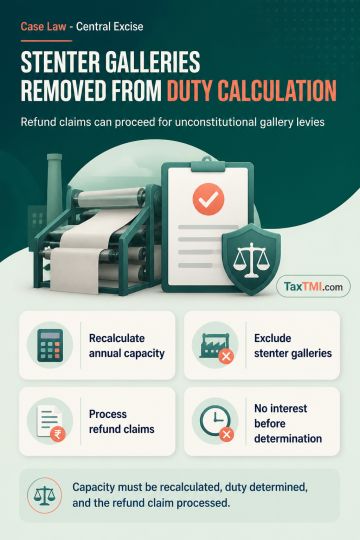
Annual production capacity determinations excluding stenter galleries support refunds for unconstitutional excise levies without an unjust-enrichment ...
Vicarious liability for cheque dishonour requires specific allegations of responsibility and cheque signatory; generic director allegations cannot sus...
IT Resilience Index requires market infrastructure institutions to automate resilience scoring, early warnings, and continuous service-delivery monito...
AT held that the company and its KMPs engaged in self-funding of preferential allotment in breach of s.77(2) Companies Act and Regulations 3,4(1) of the PFUTP Regulations, and that several allottee and conduit entities aided the scheme; the Tribunal found a proximate fund flow of Rs.3.42 crore originating from the company into preferential subscriptions and sustained liability for that quantum. However, AT accepted that conduit entities had received Rs.10.47 crore and that no sufficient linkage was established for the excess transfers; considering those facts and attendant evidence, AT allowed the appeal challenging the impugned penalties as applied jointly and severally to the appellants, while rejecting delay-based dismissal.
AT held that the company and its KMPs engaged in self-funding of preferential allotment in breach of s.77(2) Companies Act and Regulations 3,4(1) of the PFUTP Regulations, and that several allottee and conduit entities aided the scheme; the Tribunal found a proximate fund flow of Rs.3.42 crore originating from the company into preferential subscriptions and sustained liability for that quantum. However, AT accepted that conduit entities had received Rs.10.47 crore and that no sufficient linkage was established for the excess transfers; considering those facts and attendant evidence, AT allowed the appeal challenging the impugned penalties as applied jointly and severally to the appellants, while rejecting delay-based dismissal.
Note: It is a system-generated summary and is for quick reference only.
 TaxTMI
  TaxTMI
 of 4828



















 Join Channel