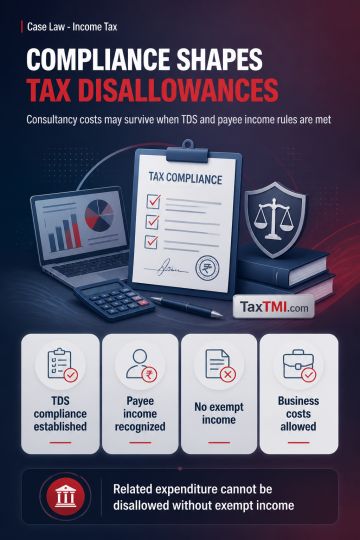
Tax deduction compliance and payee income recognition govern consultancy disallowance, while no exempt income prevents related expenditure disallowanc...
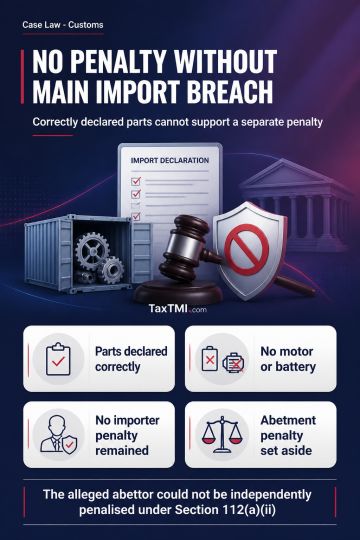
Derivative abetment liability fails when correctly declared imported components establish no underlying improper importation by the principal importer...
Page of 4800
Press 'Enter' after typing page number.
601 to 620 of 96000 Results
❮
❯
❯❯
0 / 200
Expand Note
Add to Folder
No Folders have been created
+
Are you sure you want to delete "My most important" ?
The HC dismissed the petition challenging an ex parte order under Section 74 UPGST Act, holding the challenge misconceived and liable to be rejected. The court found the appellant pursued successive writs to evade the pre-deposit required by Section 107(6)(b) of the GST Act, failed to seek exemption from pre-deposit before the appellate authority and the apex court, and did not prosecute the statutory appeal within limitations. Applying principles of Order II Rule 2 CPC, the HC held the remedy of appeal and exemption were always available and deliberately not pursued; accordingly the petition is dismissed for non-compliance with the statutory pre-deposit requirement and procedural abuse.
The HC dismissed the petition challenging an ex parte order under Section 74 UPGST Act, holding the challenge misconceived and liable to be rejected. The court found the appellant pursued successive writs to evade the pre-deposit required by Section 107(6)(b) of the GST Act, failed to seek exemption from pre-deposit before the appellate authority and the apex court, and did not prosecute the statutory appeal within limitations. Applying principles of Order II Rule 2 CPC, the HC held the remedy of appeal and exemption were always available and deliberately not pursued; accordingly the petition is dismissed for non-compliance with the statutory pre-deposit requirement and procedural abuse.
Note: It is a system-generated summary and is for quick reference only.
 TaxTMI
 of 4800










 Join Channel


 TaxTMI