Transfer pricing and tax deductions upheld on established principles, while employee contributions and warranty provisions returned for fresh examinat...
Captive transfer pricing relies on industrial consumer tariffs, while genuine quotations can benchmark effluent treatment transfers under the Other Me...
Specific tariff classification for ophthalmic instruments and extended limitation principles determine the treatment of duty demands, confiscation, an...
Integrated golf function determines classification, placing launch monitors and simulators under other golf equipment rather than measuring instrument...
Public servant status under anti-corruption law extends to recognised stock exchange leadership; constitutional and sanction challenges do not succeed...
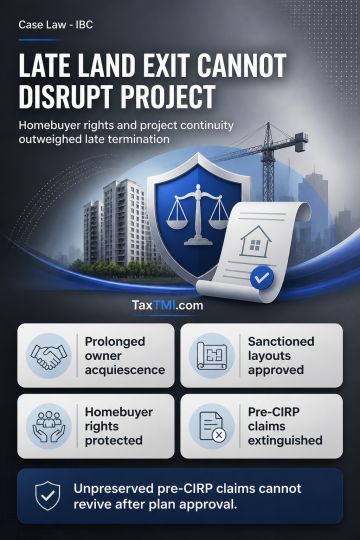
Acquiescence, homebuyer protection and clean-slate resolution principles prevent landowners from disrupting an integrated project through late termina...
AAR held that fusible interlining fabric composed of 85% or more cotton is classifiable under Chapter 52 of the Tariff Schedule. Relying on the legal effect of the Tribunal's prior order and Circular No. 5/89 concerning the treatment of fusible interlinings before the insertion and after deletion of Note 2(c) to Chapter 59, the Authority concluded that such goods are to be classified according to their predominant textile material; where cotton predominates, Chapter 52 applies. The applicant's submitted laboratory test establishing textile composition governed the classification outcome, resulting in duty treatment and tariff classification under Chapter 52.
AAR held that fusible interlining fabric composed of 85% or more cotton is classifiable under Chapter 52 of the Tariff Schedule. Relying on the legal effect of the Tribunal's prior order and Circular No. 5/89 concerning the treatment of fusible interlinings before the insertion and after deletion of Note 2(c) to Chapter 59, the Authority concluded that such goods are to be classified according to their predominant textile material; where cotton predominates, Chapter 52 applies. The applicant's submitted laboratory test establishing textile composition governed the classification outcome, resulting in duty treatment and tariff classification under Chapter 52.
Note: It is a system-generated summary and is for quick reference only.
 TaxTMI
 of 4805

















 Join Channel


 TaxTMI