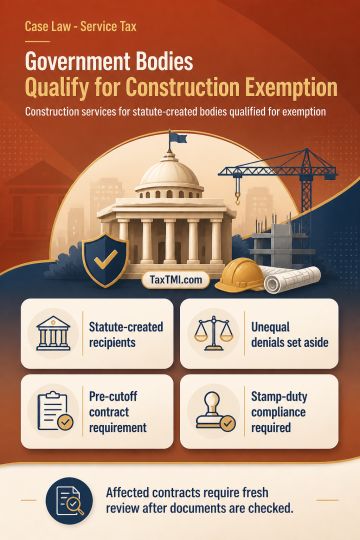
Governmental authority status supports construction-service exemption, while pre-cutoff contract and stamp-duty compliance requires verification on re...
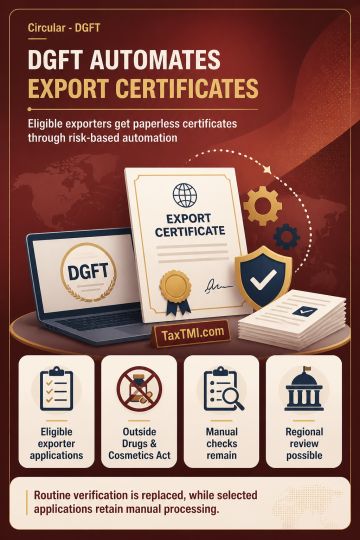
Automated Free Sale and Commerce Certificates enable paperless processing while retaining risk-based manual verification for selected exporter applica...
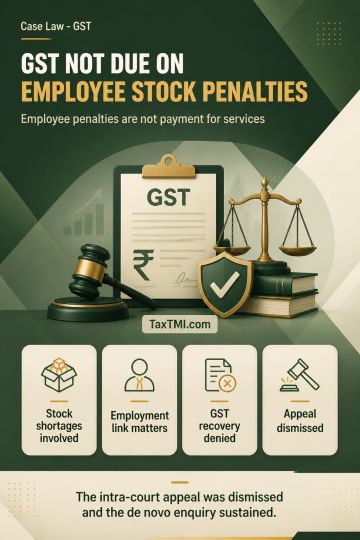
Employee stock-shortage penalties do not constitute consideration for services, preventing GST collection under Schedule II in employment relationship...
CESTAT allowed the appeals, holding that the appellants discharged the statutory burden under s.27, Customs Act, 1962, by producing a Chartered Accountant's certificate and record evidence demonstrating that imported goods were sold below cost. The Tribunal applied the principle that such admissible proof shifts the onus to the revenue to adduce affirmative evidence that duty was passed on to buyers. The revenue failed to rebut the presumption of non-passing-on or to establish recovery of duty-inclusive prices; consequently the bar of unjust enrichment was held inapplicable. Relief was granted to the appellants and the refunds sought were thereby held admissible.
CESTAT allowed the appeals, holding that the appellants discharged the statutory burden under s.27, Customs Act, 1962, by producing a Chartered Accountant's certificate and record evidence demonstrating that imported goods were sold below cost. The Tribunal applied the principle that such admissible proof shifts the onus to the revenue to adduce affirmative evidence that duty was passed on to buyers. The revenue failed to rebut the presumption of non-passing-on or to establish recovery of duty-inclusive prices; consequently the bar of unjust enrichment was held inapplicable. Relief was granted to the appellants and the refunds sought were thereby held admissible.
Note: It is a system-generated summary and is for quick reference only.
 TaxTMI
  TaxTMI
 of 4827







 Join Channel


