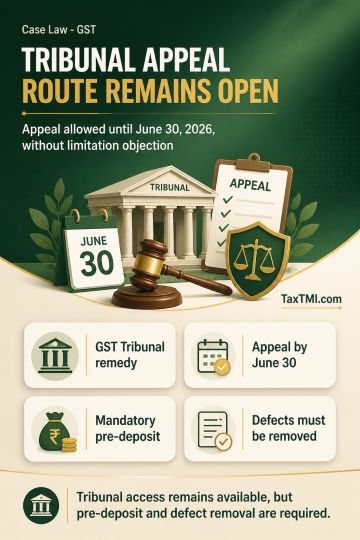
Transfer pricing and tax deductions upheld on established principles, while employee contributions and warranty provisions returned for fresh examinat...
Captive transfer pricing relies on industrial consumer tariffs, while genuine quotations can benchmark effluent treatment transfers under the Other Me...
Specific tariff classification for ophthalmic instruments and extended limitation principles determine the treatment of duty demands, confiscation, an...
Integrated golf function determines classification, placing launch monitors and simulators under other golf equipment rather than measuring instrument...
Public servant status under anti-corruption law extends to recognised stock exchange leadership; constitutional and sanction challenges do not succeed...
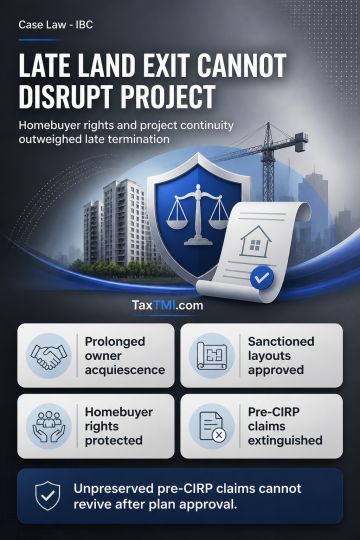
Acquiescence, homebuyer protection and clean-slate resolution principles prevent landowners from disrupting an integrated project through late termina...
HC dismissed the writ petition and held it premature and not maintainable, directing the petitioner to pursue the statutory remedy under Section 107 rather than relief under Article 226. The court recorded that where a proper officer (not below Joint Commissioner) has reasons to believe under Section 67 of suppression or evasion, he may inspect, search and, under Section 69, arrest, and seize documents; thereafter a notice under Section 73 (three-year limitation) or Section 74 (five-year limitation) may be issued. The court refused to examine the correctness of issuance of a Section 74 notice at writ stage, leaving the limitation and merits to the adjudicatory authority; observations of the HC are not to influence the proper officer.
HC dismissed the writ petition and held it premature and not maintainable, directing the petitioner to pursue the statutory remedy under Section 107 rather than relief under Article 226. The court recorded that where a proper officer (not below Joint Commissioner) has reasons to believe under Section 67 of suppression or evasion, he may inspect, search and, under Section 69, arrest, and seize documents; thereafter a notice under Section 73 (three-year limitation) or Section 74 (five-year limitation) may be issued. The court refused to examine the correctness of issuance of a Section 74 notice at writ stage, leaving the limitation and merits to the adjudicatory authority; observations of the HC are not to influence the proper officer.
Note: It is a system-generated summary and is for quick reference only.
 TaxTMI
 of 4803












 Join Channel


 TaxTMI