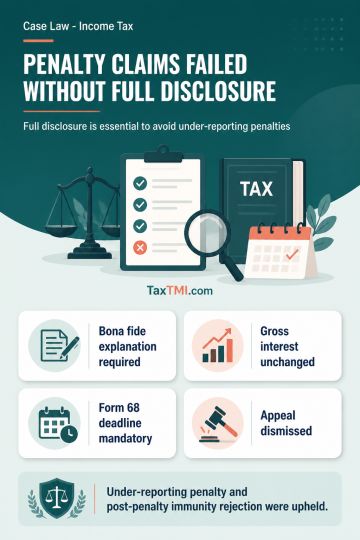
Bona fide disclosure requirements govern under-reporting penalties, and post-penalty immunity applications cannot secure available statutory protectio...
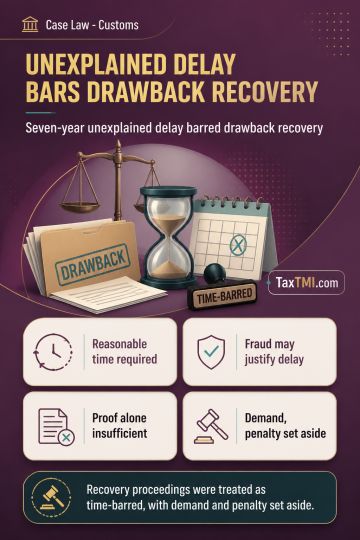
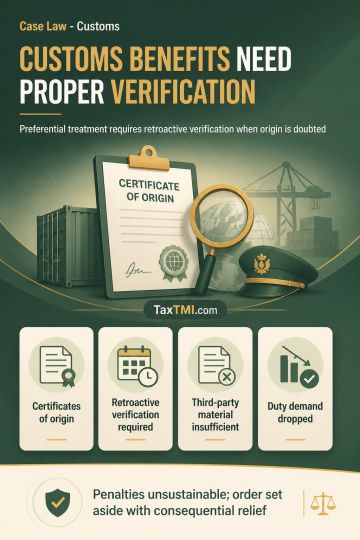
Certificate-of-origin verification procedure governs preferential customs benefits; denial without retroactive verification was set aside with consequ...
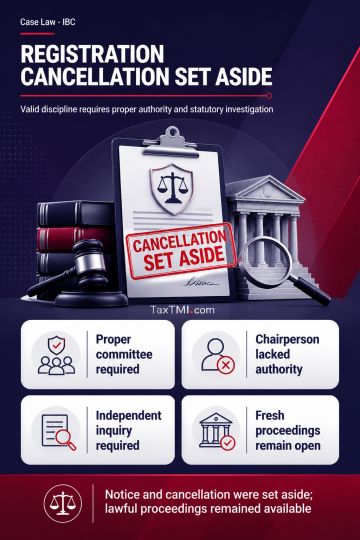
Disciplinary Committee jurisdiction and mandatory investigation requirements invalidated cancellation of an insolvency professional's registration and...
AAR holds that input tax charged on Hydrotreated Vegetable Oil (HVO)/renewable diesel may be claimed as input tax credit by the applicant only if all statutory conditions and restrictions under Section 16 read with Section 17 of the CGST Act, 2017 are satisfied; availability is case-specific and subject to applicable rules framed under Section 164. The Authority affirms that imposition of uniform statutory restrictions on ITC is constitutionally valid and that ITC is not an absolute right. The taxpayer bears the evidentiary burden to establish admissibility of credit through prescribed records and payments. The AAR declines to adjudicate on technical or legal classification of HVO as fuel, as that question falls outside its remit.
AAR holds that input tax charged on Hydrotreated Vegetable Oil (HVO)/renewable diesel may be claimed as input tax credit by the applicant only if all statutory conditions and restrictions under Section 16 read with Section 17 of the CGST Act, 2017 are satisfied; availability is case-specific and subject to applicable rules framed under Section 164. The Authority affirms that imposition of uniform statutory restrictions on ITC is constitutionally valid and that ITC is not an absolute right. The taxpayer bears the evidentiary burden to establish admissibility of credit through prescribed records and payments. The AAR declines to adjudicate on technical or legal classification of HVO as fuel, as that question falls outside its remit.
Note: It is a system-generated summary and is for quick reference only.
 TaxTMI
 of 4805







 Join Channel


 TaxTMI
