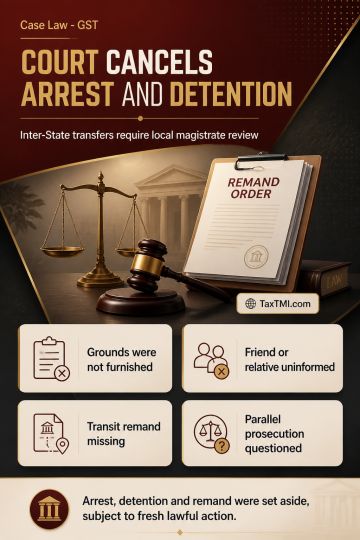
Arrest safeguards and transit remand requirements invalidated detention following inter-State transfer without communicated grounds or magistrate auth...
Arrest safeguards require disclosed grounds, relative intimation and transit remand, while duplicate prosecution under the CGST framework is unsustain...
Document Identification Number defects can invalidate GST assessments, with delayed challenges entertained conditionally where patent irregularities e...
Windmill commissioning evidence supported higher depreciation where grid connection and electricity generation proved operational use before the relev...
Pharmaceutical promotion and transfer-pricing comparability principles limited disallowances, while uncorroborated search allegations and unsupported ...
Business expenditure substantiation supports scrap credits, statutory payments and expense claims, while depreciation requires proof of actual busines...
CESTAT allowed the appeal and set aside the impugned order, holding that the PIMS registration timeline is directory rather than mandatory. The Tribunal concluded the delayed upload of the PIMS certificate (after the five-day cut-off but prior to cargo clearance) constituted a procedural lapse, not a substantive breach warranting confiscation or penalty that would deprive the appellant of goods. Applying established principle that procedural timelines framed as permissive do not automatically attract forfeiture, CESTAT found the appellant's explanation of late receipt of shipping documents justified and that compliance before clearance satisfied the object of the notification; consequential order of confiscation was therefore quashed.
CESTAT allowed the appeal and set aside the impugned order, holding that the PIMS registration timeline is directory rather than mandatory. The Tribunal concluded the delayed upload of the PIMS certificate (after the five-day cut-off but prior to cargo clearance) constituted a procedural lapse, not a substantive breach warranting confiscation or penalty that would deprive the appellant of goods. Applying established principle that procedural timelines framed as permissive do not automatically attract forfeiture, CESTAT found the appellant's explanation of late receipt of shipping documents justified and that compliance before clearance satisfied the object of the notification; consequential order of confiscation was therefore quashed.
Note: It is a system-generated summary and is for quick reference only.
 TaxTMI
 of 4792





















 Join Channel


 TaxTMI