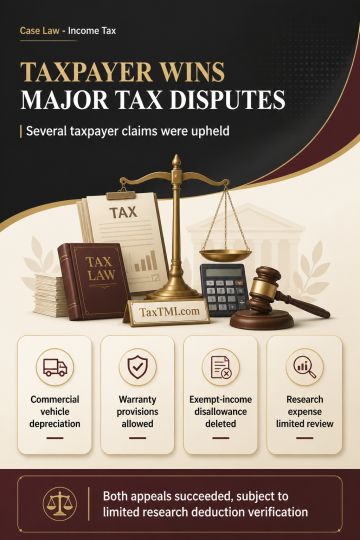
Commercial vehicle depreciation, scientifically determined warranty provisions and exempt-income disallowances were resolved in favour of the taxpayer...
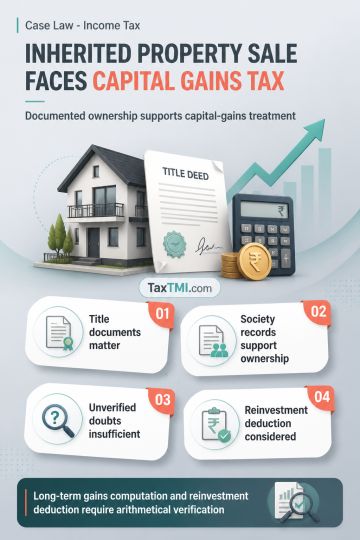
Inherited property sale proceeds require capital-gains treatment where ownership is supported by evidence, not suspicion or unverified signature doubt...
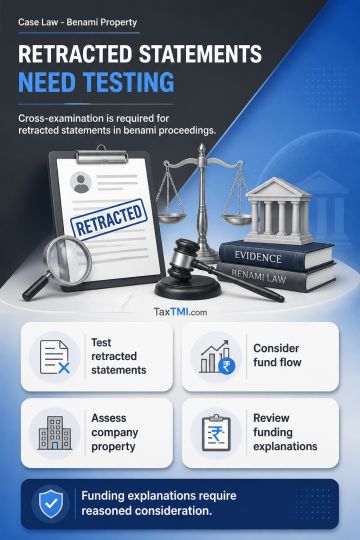
Cross-examination of retracted statements is essential where foundational evidence supports a benami allegation and documented funding explanations re...
Capital-goods exemption covers plant-modernisation accessories, while the import restriction applies only to earlier capital-goods components and spar...
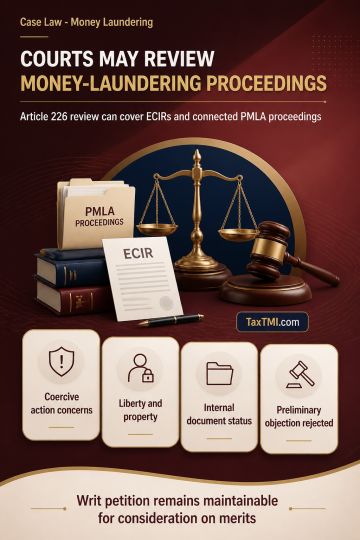
Constitutional judicial review permits challenges to ECIRs and connected money-laundering proceedings where coercive action affects fundamental intere...
The NCLAT allowed the appeal, set aside the impugned NCLT direction to convene meetings of remaining unsecured creditors and dispensed with the requirement to hold such meetings under Section 230 of the Companies Act. The Tribunal held that the NCLT's mandate to convene meetings despite recorded consents exceeding the 90% by value threshold constituted jurisdictional overreach and was legally unsustainable, particularly where the transferee's net worth materially improves post-scheme and unsecured claims are negligible relative to net worth. Applying Sections 230(6) and 230(9), the NCLAT concluded there is no compromise of unsecured creditors' rights and no necessity to call meetings, and accordingly allowed the appeal.
The NCLAT allowed the appeal, set aside the impugned NCLT direction to convene meetings of remaining unsecured creditors and dispensed with the requirement to hold such meetings under Section 230 of the Companies Act. The Tribunal held that the NCLT's mandate to convene meetings despite recorded consents exceeding the 90% by value threshold constituted jurisdictional overreach and was legally unsustainable, particularly where the transferee's net worth materially improves post-scheme and unsecured claims are negligible relative to net worth. Applying Sections 230(6) and 230(9), the NCLAT concluded there is no compromise of unsecured creditors' rights and no necessity to call meetings, and accordingly allowed the appeal.
Note: It is a system-generated summary and is for quick reference only.
 TaxTMI
 of 4782






 Join Channel


 TaxTMI
